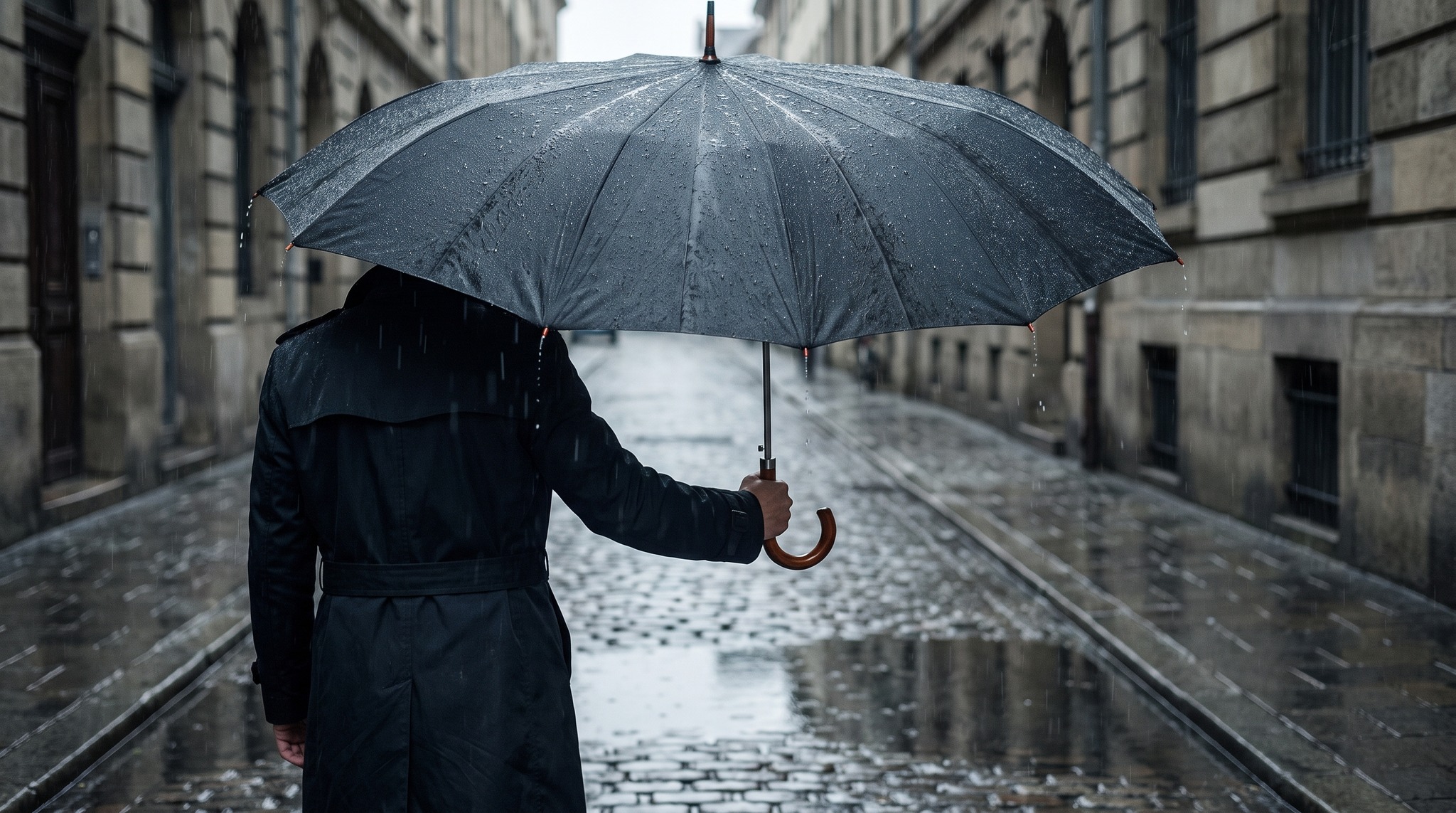
Handle Length and Body Height: What Fits Ergonomically
Many people reach for the first umbrella they see without checking whether the handle suits their hand and body height. Yet handle length plays a decisive role in how comfortably you can hold the umbrella over extended periods. A handle that is too short forces the hand into a cramped position, while one that is too long constantly slips during walking. Knowing the right proportions protects your wrist and forearm and makes carrying the umbrella considerably more comfortable.
Why Handle Length Matters at All
The handle forms the only point of contact between you and the umbrella. With a stick umbrella, it rests in your hand for the entire duration of use, and with a folding umbrella often just as long. A handle length between 9 and 12 centimetres is considered standard for most adults. If the measurement falls below this, the hand lacks support surface. If it exceeds this, the handle becomes unwieldy and difficult to grasp. You notice the difference particularly in windy conditions: a well-dimensioned handle can be held firmly and securely without fingers slipping.
Body Height and Stick Length in Combination
The total length of a stick umbrella should be based on your body height. As a rule of thumb: the closed umbrella should reach approximately to your hip or just above. For a body height of 160 to 170 centimetres, this corresponds to a stick length of 85 to 90 centimetres; for 175 to 185 centimetres, 90 to 95 centimetres is suitable. Taller individuals choose models from 95 centimetres upwards. High-quality Men's umbrellas often offer longer sticks and sturdier handles that fit well even with larger hands.
Coordinating Handle Shape and Hand Size
Besides length, shape plays an important role. Straight handles with a diameter of 2.5 to 3 centimetres fit medium-sized hands best. Curved crook handles distribute pressure over a larger area and relieve the wrist, but are more suitable for people with larger hands. Narrow handles under 2 centimetres in diameter can press uncomfortably during prolonged use. Ensure that your fingers encircle the handle loosely without gaps forming or fingertips touching.
Material and Surface Texture
Wood, plastic and metal feel different and influence grip security. Wooden handles offer a warm, non-slip surface and adapt well to the hand through their natural structure. Plastic is lighter and often ergonomically shaped, but can become slippery when wet. Metal handles appear elegant but cool the hand and require a textured surface for secure grip. High-quality Umbrellas often combine different materials, such as a wooden core with a rubberised coating for optimal grip.
Practical Test Before Purchase
Hold the umbrella as you would carry it later. The handle should rest completely in your palm without fingers or thumb protruding. Move your wrist slightly up and down: a well-fitting handle allows this movement without pressure or friction. With a crook handle, check whether the curve sits comfortably over your wrist when you carry the umbrella on an outstretched arm. Also pay attention to weight: a stick umbrella should weigh between 350 and 500 grams so that it can be carried effortlessly over longer distances.
Related items: Jewellery, Bags and accessories, Pocket umbrellas. The complete range: Umbrellas.
Related categories: Jewellery, Bags and accessories, Pocket umbrellas. The full range: Umbrellas.
Read more: Number of ribs on umbrellas: Six, eight or ten ribs in wind, Umbrellas on the Underground: Wet Fabric, Tight Spaces and Consideration, Guy de Jean: How to Recognise the Signature of the Manufactory, How Wind-Resistant Is an Umbrella Really: Ribs, Frame and Storm, Ferrule and Crown: Details That Reveal Quality