Handmade or Mass-Produced: How to Recognise Quality Craftsmanship
When purchasing a high-quality umbrella, you want to know whether you are holding a carefully crafted piece or a mass-produced item. But which features reveal whether an umbrella was made by hand or on an assembly line? The differences show in details that may seem inconspicuous at first glance, but say much about quality and durability. With some attention, the craftsmanship can be reliably assessed.
Seams and Tension Distribution of the Canopy
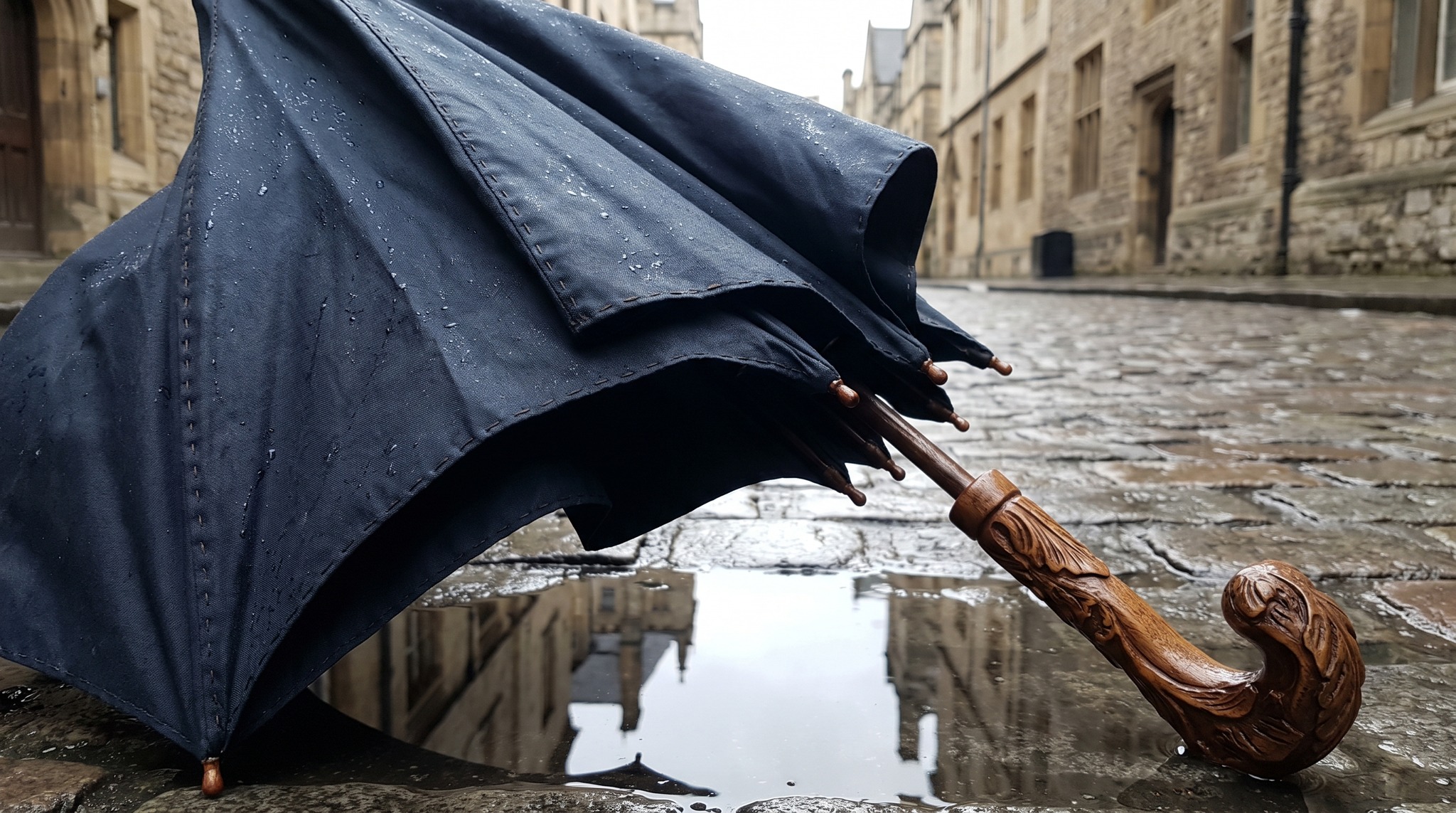
In handmade umbrellas, the seams between the panels run evenly and without wrinkles. The canopy sits taut, neither stretched nor sagging. Industrially manufactured models often show irregular seam lines or small waves in the fabric, because the panels are sewn together by machine and the tension is not manually adjusted. Pay attention to whether the seam runs cleanly at the rib ends or whether threads protrude there.
Connection Between Frame and Canopy
The way the cover is attached to the rib ends provides insight into the care taken. Handcrafted umbrellas often use double-stitched caps or small metal eyelets that are attached individually. Mass-produced goods rely on plastic caps that are machine-pressed on. While these hold, they come loose more quickly under wind load. High-quality models also show reinforced seams at the rib tips, where the greatest tensile force acts.
Handle Design and Surface Finish
The handle reveals much about the manufacturing method. Handmade handles made of wood, horn or leather display an individual grain or texture that differs slightly from piece to piece. The surface feels smooth, without sharp edges or transitions. With Designer umbrellas, the handle is often a design element that is shaped and polished in several work steps. Industrially manufactured handles made of plastic or lacquered wood, on the other hand, show mould separation lines or a uniform, glossy surface without natural variation.
Frame Details and Rivet Connections
The frame provides clues about the manufacturing depth. Manually assembled umbrellas use rivets that sit flush and have no sharp edges. The joints between ribs and runners move smoothly, without jamming or wobbling. Look for the following features:
- Rivets sit flush and are evenly finished
- Joints move without play or resistance
- Ribs are evenly curved, not kinked
- Surfaces show no paint runs or scratches
Refinements in Automatic and Manual Mechanisms
The opening and closing mechanism reveals the precision of assembly. Hand-assembled automatic mechanisms engage audibly and noticeably, without bouncing back. The release button sits firmly in the shaft, without wobbling. With stick umbrellas, quality shows in how smoothly the runner slides and whether it holds in every position. Brands such as Guy De Jean have their mechanisms adjusted by hand so that each umbrella functions evenly. Mass-produced goods, on the other hand, often have a stiff runner or an automatic mechanism that releases with audible rattling.
Packaging and Accompanying Information
The presentation also provides clues. Handmade umbrellas are usually delivered in fabric sleeves or sturdy boxes, often with care instructions and information about materials. Industrial goods frequently come in thin plastic bags or simple cardboard boxes. If manufacturer information, warranty cards or repair instructions are included, this indicates a manufacturer who values longevity.
Related items: Jewellery, Bags and accessories, Pocket umbrellas. The complete range: Umbrellas.
Related categories: Jewellery, Bags and accessories, Pocket umbrellas. The full range: Umbrellas.
Read more: The Umbrella in the Stand: What Moisture Does to Floors, Two Umbrellas in the Household: the Large and the Small, Span, Length, Weight: the Measurements That Matter in Daily Use, Ruffle Trim, Flounce, Double Canopy: Terms Explained, Having umbrellas repaired instead of throwing them away