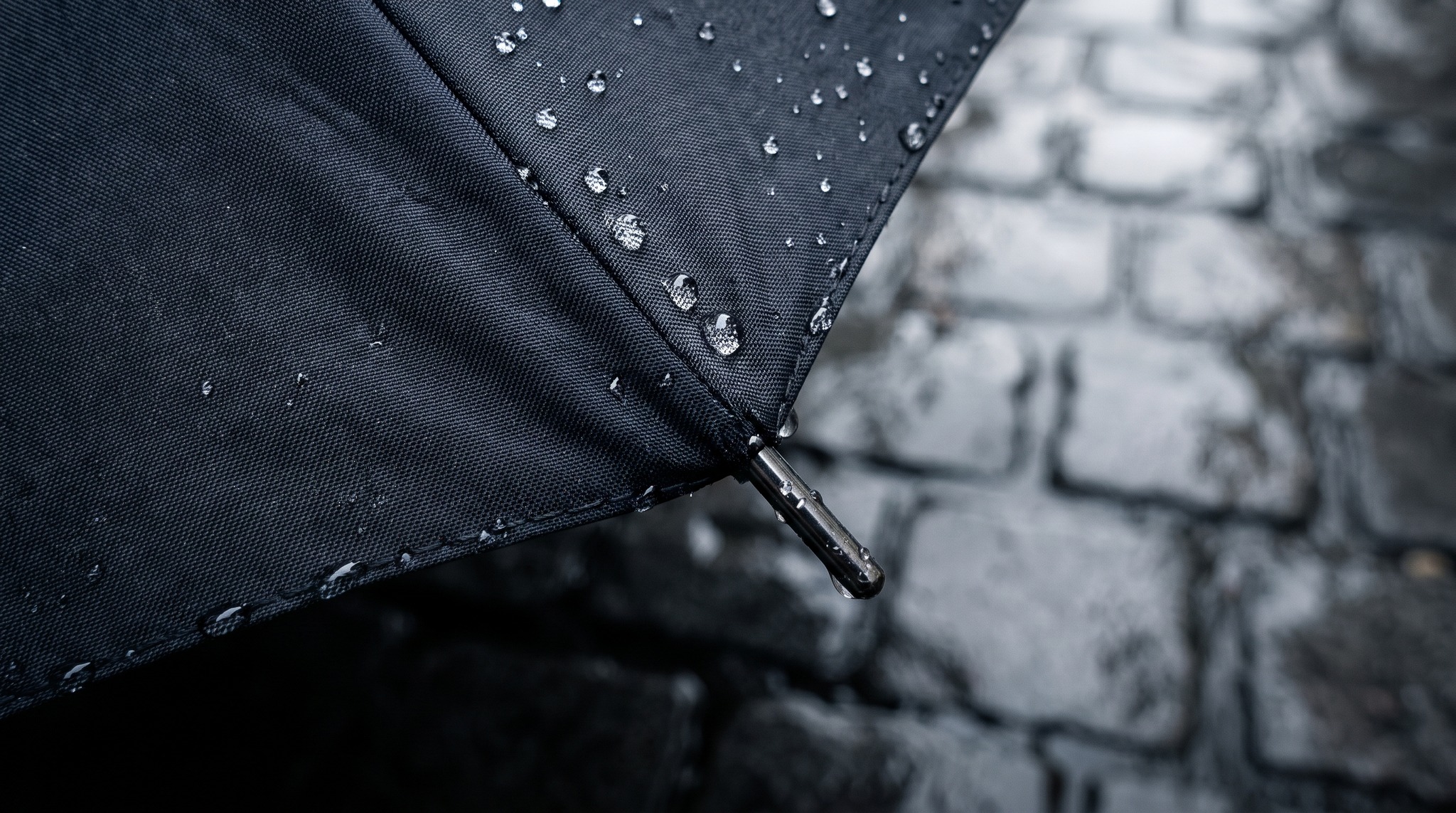
Seam and Seams: Where an Umbrella Leaks in the Rain
You open your umbrella in pouring weather and notice moisture on your shoulder or sleeve after just a few minutes. Often the cause is not the fabric itself, but the seams between the segments. Water can penetrate precisely at these connection points if the seam or workmanship is not of high quality. This article shows exactly where the weak points are and what you should look for in care and when purchasing.
Why Seams Are the Critical Point
An umbrella consists of several fabric panels that are sewn together to form a canopy. At each seam, threads penetrate the fabric and leave tiny holes. Even with tightly woven polyester or pongee silk, these needle points form potential channels for rainwater. High-quality Umbrellas therefore use sealed or double-stitched seams, where the thread guidance is so tight that capillary action prevents penetration. Inexpensive models often omit this measure, so that moisture seeps through after repeated use.
Seam Sealing and Manufacturing Quality
Manufacturers employ different techniques to keep seams waterproof. Some glue a narrow tape to the inside of the seam, others impregnate the thread itself with a water-repellent treatment. With Designer umbrellas, seam sealing is standard, as durability and functionality are paramount. When purchasing, ensure that the seams run smoothly and evenly on the underside. Protruding threads or irregular stitches indicate poor workmanship.
Care After Rain Protects the Seam
Moisture that remains in the seam can attack the thread over time and loosen the seal. Open the umbrella completely after use and let it dry in an airy place. Do not fold the canopy while it is wet, as water will then pool in the seams and stress the material. Avoid aggressive cleaning agents that can damage the waterproofing and seam sealing. Occasional re-waterproofing with spray extends the lifespan and keeps the seams tight as well.
Specific Notes on Durability
The number of seams depends on the number of segments. An eight-panel umbrella has eight longitudinal seams, a sixteen-panel model correspondingly twice as many. More seams mean potentially more weak points, but also more even tension in the fabric. What matters is the thread thickness and stitch density: high-quality models have at least 12 stitches per centimeter. When purchasing new, check the seam against the light: visible holes are a warning sign.
Repair or Replacement
Small leaks in the seam can be sealed with special seam sealer from outdoor supplies. Apply the product thinly to the dry seam and let it cure for at least twelve hours. For larger damage or when multiple seams are affected, professional repair or replacement of the cover is worthwhile. Many manufacturers offer replacement canopies, so a sturdy frame can continue to be used.
Material Choice and Construction
Polyester with tight weave and additional coating offers the best protection against moisture at the seams. Cotton swells when wet and thereby partially seals the needle holes, but dries more slowly. Silk requires careful sealing, as the fine fabric itself leaves little margin. Ensure that the seam does not run directly over a rib, as mechanical stress and moisture meet there.
Related items: Jewellery, Bags and accessories, Pocket umbrellas. The complete range: Umbrellas.
Related categories: Jewellery, Bags and accessories, Pocket umbrellas. The full range: Umbrellas.
Read more: Handle Length and Body Height: What Fits Ergonomically, Number of ribs on umbrellas: Six, eight or ten ribs in wind, Umbrellas on the Underground: Wet Fabric, Tight Spaces and Consideration, The Handle When Walking: Form, Balance and Wrist, The Umbrella in the Stand: What Moisture Does to Floors