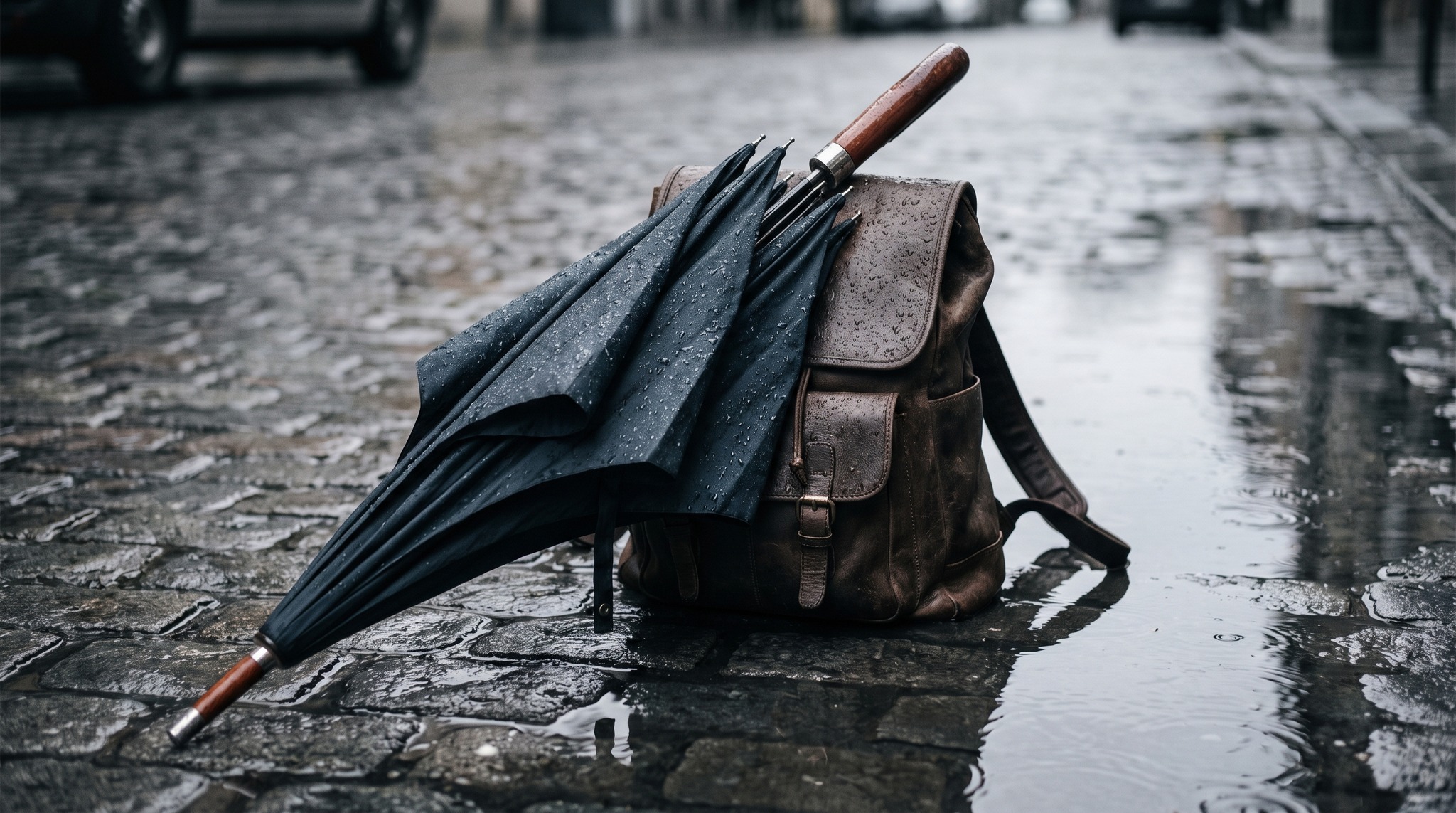
Umbrella and Backpack: Moisture, Weight and Carrying Comfort
When travelling with a backpack, rain raises the question: where to put the umbrella when it is wet? How can the weight be distributed sensibly? And which combination protects back and shoulders without the umbrella getting in the way or dripping? The right choice of umbrella type and carrying method determines whether you arrive at your destination dry and comfortable.
Compact Design Saves Space In and On the Backpack
A folded stick umbrella often protrudes 80 to 90 centimetres from the side pocket, whilst a pocket umbrella measures only 25 to 30 centimetres when closed. If you attach the umbrella to the outside of the backpack, you benefit from the short design: the umbrella does not bump against calves or the back of the head, and the weight sits closer to the body's centre of gravity. Inside a trekking or day backpack, a Pocket umbrellas fits easily without displacing other items. Look for a sturdy case that separates wet canopy from clothing and electronics.
Weight and Ribs: Stability Without Ballast
High-quality pocket umbrellas weigh between 250 and 400 grams, stick umbrellas range from 350 to 600 grams. Every gram counts on longer tours, but an umbrella that is too light will buckle in wind. Models with six to eight fibreglass ribs offer a good balance of strength and weight. Aluminium frames are lighter but less flexible. An umbrella with a span of around 95 to 105 centimetres covers head and backpack without being unnecessarily heavy.
Allow Wet Canopy to Dry
After rain, you should leave the umbrella open to dry in an airy place before storing it. Polyester and pongee fabrics absorb little water and dry faster than cotton. If you put the umbrella into the backpack whilst damp, you risk mildew and unpleasant odour. A waterproof inner sleeve or a separate wet compartment in the backpack helps if you cannot take a drying break whilst on the move. Gently squeeze out excess water without wringing the canopy.
Carrying Method: Umbrella Outside or Inside
Attached to the outside of the backpack, the umbrella remains within easy reach and drips off without soaking the contents. Many backpacks offer loops or compression straps on the sides. Stored inside, the umbrella is protected from theft and damage, but takes up volume. For day trips, a small pocket umbrella in the lid compartment is sufficient; for multi-day hikes, a lightweight stick umbrella with a detachable handle that can be separated into two parts is recommended. Before purchasing, check whether length and diameter match your backpack model.
Supplementary Equipment for Dry Shoulders
An umbrella protects head and upper body, but in strong wind or on long marches, shoulders and backpack straps get wet. A rain cover for the backpack is a sensible complement to the umbrella: it covers the luggage and prevents water from penetrating through zips. Those who frequently travel with a heavy backpack should choose an umbrella with an ergonomic handle that can be held securely even with gloves. In the Bags and accessories category, you will find suitable cases and protective covers that keep wet umbrellas cleanly separated from the rest of your luggage.
Care After the Tour
Rinse off salt and dirt with clear water after coastal walks or city tours. Open the umbrella fully and let it air dry, not in the sun or on a radiator. Check ribs and joints for cracks or deformation. A well-maintained umbrella lasts several years and remains a reliable companion in all weather conditions.
Related: Romantic, Jewellery, Chantal Thomass. The complete range: Umbrellas.
Related categories: Romantic, Jewellery, Chantal Thomass. The full range: Umbrellas.
Read more: Umbrella when pushing a pram: grip, steering and one hand, Pagoda Shape and Classic Dome: Avoiding Rain on the Neck, The Umbrella While Shopping: Supermarket, Stand and Wetness, Umbrella and Glasses: Drops, Rim and Field of Vision in Rain Protection, Combining Umbrellas and Jewellery: Metal, Stone and Water