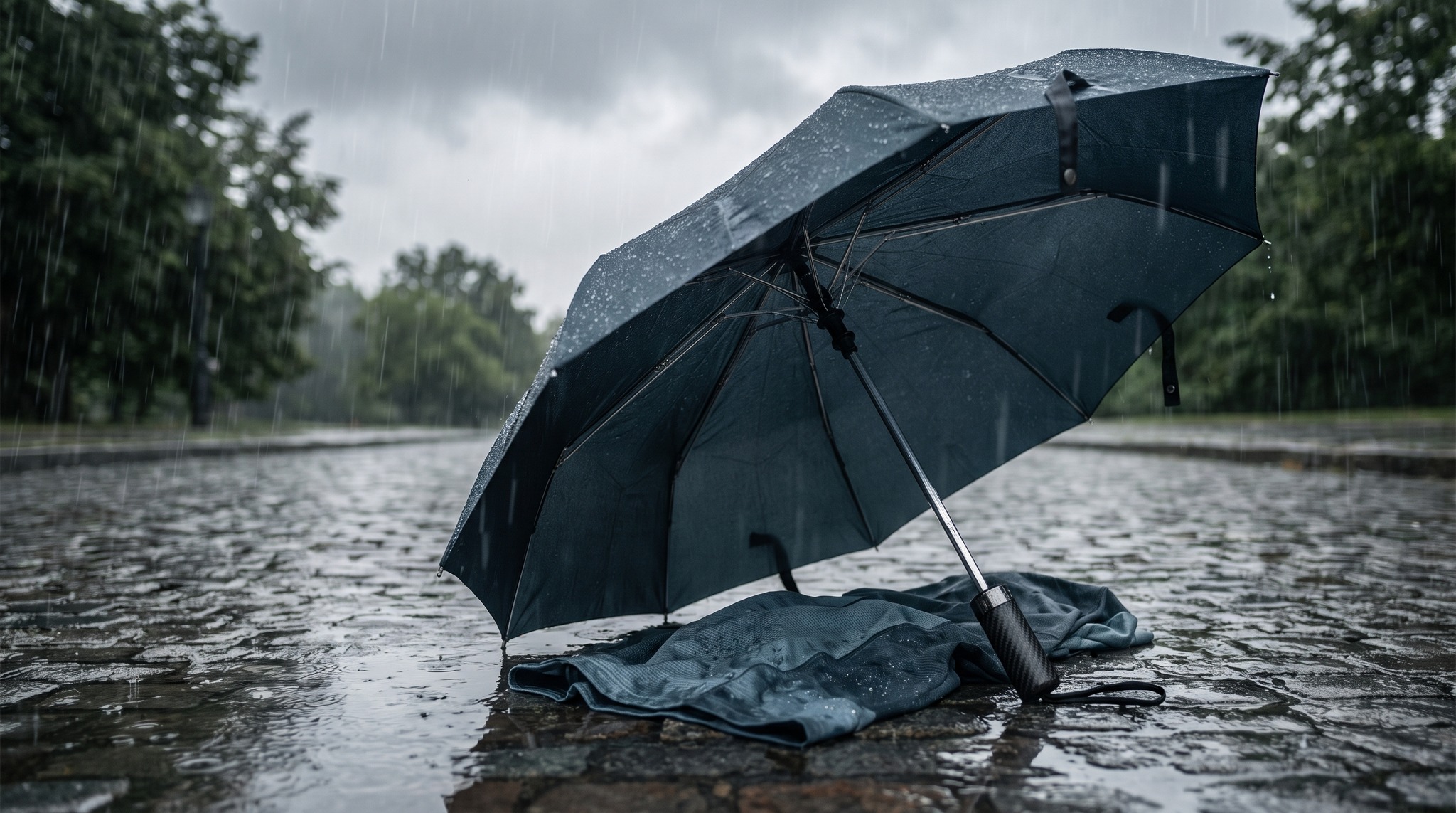
Umbrella and Sportswear: Material, Colour and Contrast
Anyone who jogs, walks or cycles to work in wind and rain knows the problem: the functional jacket is breathable and waterproof, but the umbrella matches neither in colour nor in practicality. How can high-quality Umbrellas be combined with sportswear without material, colour or handling causing issues? This article shows what you should look for in frame, canopy and handle so that the umbrella fits the technical equipment of your outdoor wardrobe.
Lightweight Frames for Movement
Sportswear focuses on low weight and high mobility. An umbrella with an aluminium frame weighs between 300 and 450 grams and barely burdens arm or rucksack. Look for six to eight ribs that give the umbrella stability even in gusty wind. Models with fibreglass ribs bend in storms without breaking and return to their original shape. A stick umbrella with 100 to 110 centimetres span protects upper body and rucksack, a Pocket umbrellas with 90 to 95 centimetres diameter fits into the side pocket of the sports bag.
Canopy: Pongee and Polyester
Functional jackets usually consist of polyester or polyamide with water-repellent coating. The canopy of high-quality umbrellas uses pongee fabric, a dense polyester fabric that allows rain to bead off and dries quickly. After training, the umbrella can be left open, after ten to fifteen minutes the canopy is dry. Avoid cotton-blend fabrics that absorb moisture and become heavier. Polyester canopies weigh approximately 150 to 200 grams when dry and absorb hardly any water.
Colour and Contrast: Visibility in Traffic
Sportswear often relies on neon yellow, orange or reflective strips so that cyclists and joggers remain visible in road traffic. An umbrella in black or dark blue absorbs light and reduces the signal effect. Instead, choose a canopy in strong red, bright green or light grey. Two-tone models with contrasting edge increase visibility additionally. Anyone wearing a dark jacket sets a deliberate accent with a light umbrella that stands out in twilight and rain.
Handle and Handling During Sport
A straight wooden handle or a classic crook handle suits everyday clothing, but is disruptive during sport. Prefer an ergonomic plastic handle that remains non-slip even when the hand sweats or is wet. Rubber or textured polypropylene offer secure grip. The handle should be shaped so that you can guide the umbrella even with gloves. Automatic opening by push-button makes handling easier when you are holding a bag or water bottle in the other hand.
Care After Training
After running or cycling, the umbrella should not go straight into its cover. Open it and allow frame and canopy to dry in the air. Remove dirt from road splashes with clear water and a soft cloth. Only store the umbrella closed when it is completely dry, otherwise mildew forms on the fabric. Check the ribs and mechanism regularly so that the umbrella functions reliably in all weather conditions.
Rule of Thumb for Selection
- Weight under 400 grams for longer distances
- Span 90 to 110 centimetres depending on body height
- Pongee canopy for quick drying
- Light or high-contrast colour for visibility
- Ergonomic plastic handle for secure grip
Related: Jean Paul Gaultier, Pagoda umbrellas, Romantic. The complete range: umbrellas.
Related categories: Jean Paul Gaultier, Pagoda umbrellas, Romantic. The full range: Umbrellas.
Read more: Is a Pocket Umbrella Allowed in Hand Luggage: Security, Length and Metal Detectors, Walking Stick Umbrella as a Walking Aid: When the Handle Is Suitable, Jean Paul Gaultier: Patterns That Come Alive in the Rain, Wind Tunnel and Reality: What Manufacturers Test and Omit, Cover and Case: Protection for Your Umbrella or a Waste of Space