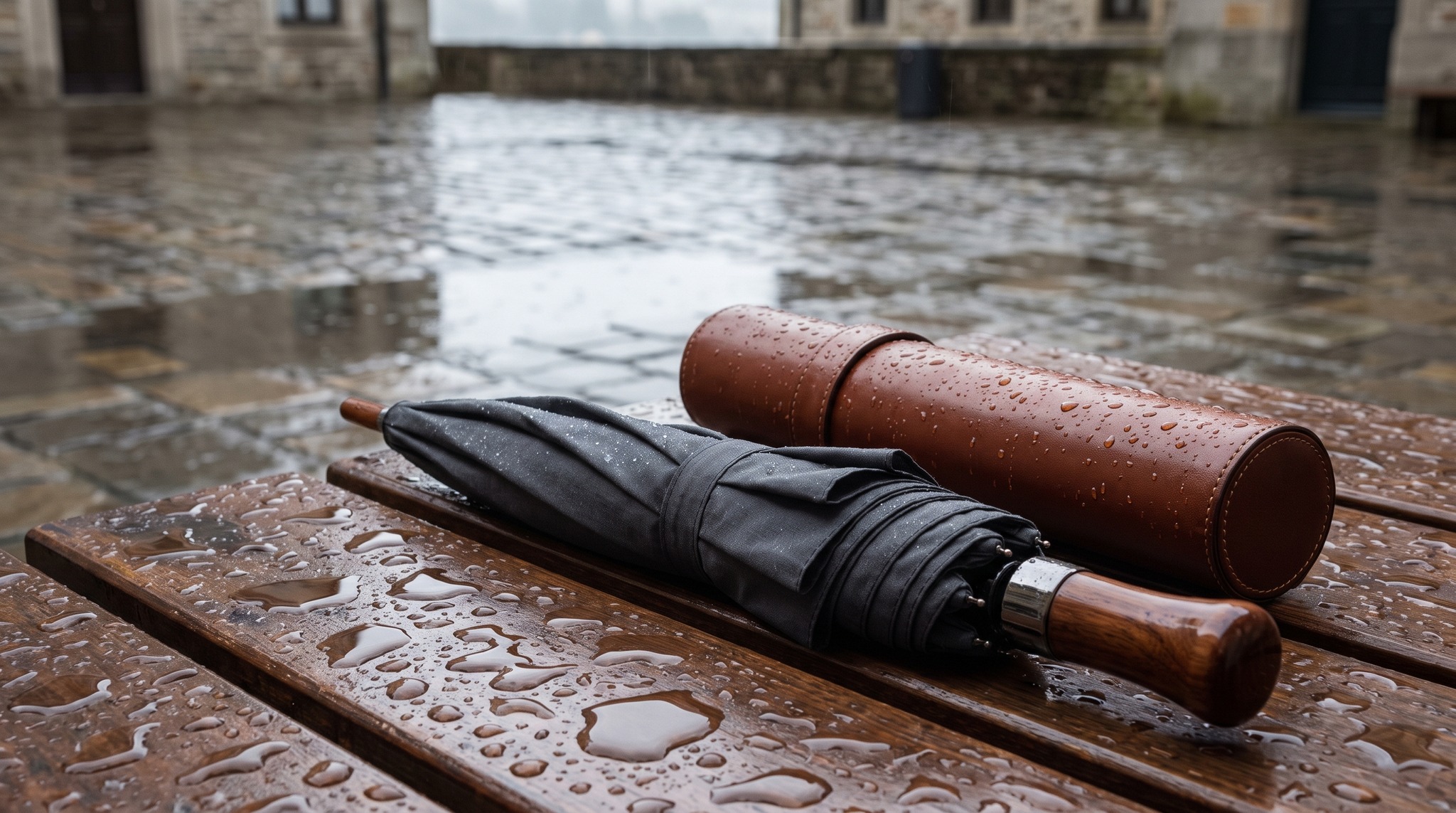
Cover and Case: Protection for Your Umbrella or a Waste of Space
Many umbrellas come with a cover or case. Some owners use them daily, while others leave them in a drawer after first use. But what function does a protective cover really serve? Does it preserve the material, or does it simply take up valuable space in your bag? The answer depends on the type of umbrella, the material, and your personal habits.
Protection for Delicate Canopies
High-quality umbrella canopies made of silk, printed polyester, or coated fabrics can be damaged by friction. If you carry the umbrella in a bag with keys, pens, or other hard objects without a cover, pressure marks or small tears will develop over time. A cover made of soft fabric or synthetic leather forms a buffer layer and prevents direct contact. Particularly for models with elaborate prints or delicate colours, this protection visibly extends the lifespan.
Frame and Mechanism Benefit as Well
The frame also suffers from uncontrolled transport. Ribs made of steel or fibreglass can bend when the umbrella is wedged into a full bag. The opening mechanism, whether manual or automatic, contains springs and joints that can be knocked out of alignment by impacts. A case stabilises the closed umbrella and distributes external pressure evenly. Pocket umbrellas with their compact construction and multiply folded ribs particularly benefit from this additional support.
Avoiding Moisture and Mould Formation
A cover should never be placed over a wet umbrella. Moisture trapped between the canopy and case leads to mildew stains, unpleasant odours, and in the worst case, mould on the fabric. Allow the umbrella to dry completely after each use before storing it. To do this, open it in an airy location, hang it up, or stand it with the handle upwards. Only when the canopy and frame are dry should the cover be used again.
When You Can Do Without the Cover
If you use the umbrella daily and store it between uses in an umbrella stand or on a hook, a cover is unnecessary. Robust walking umbrellas with sturdy handles and durable canopies also manage without additional protection. In such cases, forgoing the case saves weight and volume. However, ensure that the umbrella does not slide around loosely in a bag where it might strike hard edges.
Practical Alternatives and Additions
Some manufacturers offer covers with integrated carrying straps or carabiner clips, allowing you to attach the umbrella to the outside of your bag. Other models feature a water-repellent inner lining that absorbs residual moisture. In addition to the classic case, you will find in our range Bags and accessories specifically designed for transporting umbrellas. A well-designed cover combines protection, handling, and aesthetics without becoming a burden.
Conclusion: Protection in Moderation
A cover is not essential, but it is a sensible addition for high-quality umbrellas that you frequently carry with you. It protects the canopy and frame from mechanical stress and keeps the umbrella clean. The key is to let it dry before storing and to clean the cover regularly. This way, your umbrella will remain functional and look well-maintained for years to come.
Related topics: Romantic, Jewellery, Chantal Thomass. The complete range: Umbrellas.
Related categories: Romantic, Jewellery, Chantal Thomass. The full range: Umbrellas.
Read more: Umbrellas for Photography: Free Hands and Stability, The Umbrella in a Restaurant: Cloakroom or at the Table, Drying and Storing a Wet Umbrella Properly: Care for Longevity, Patterns and Visibility: What Really Stands Out in Traffic, Colour Fastness: What Rain and UV Do to Fabrics