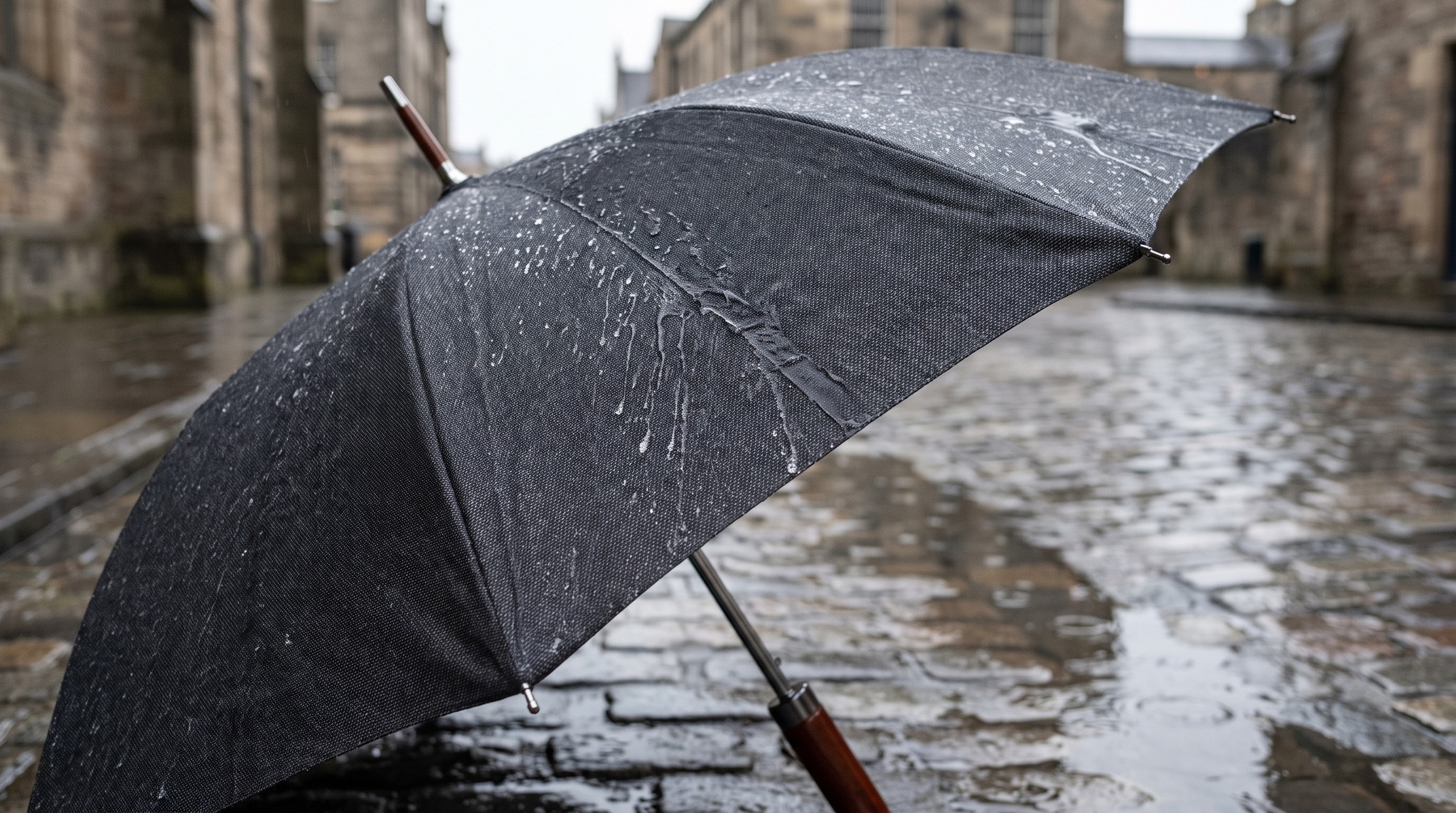
Umbrella Fabrics in the Rain: Polyester, Satin and Coated Materials
Which fabric really stays watertight in persistent rain, and which still looks good after three months? The canopy determines water resistance, durability and appearance. Polyester dominates the market, but satin and special coatings offer additional properties. Anyone who uses their umbrella frequently should know the differences.
Polyester: robust, lightweight and easy to care for
Polyester is the standard for high-quality Umbrellas because it repels moisture, dries quickly and remains dimensionally stable. The fabric weighs less than cotton or nylon for the same area, which is particularly important for folding umbrellas with spans around 95 centimetres. Polyester hardly yellows, retains its colour for years and can simply be shaken out after rain. High-quality fabrics with tight weaves achieve water columns of 3000 millimetres and more, so that no drop penetrates.
Satin: glossy surface for elegant occasions
Satin does not refer to a fibre, but to a weaving technique that creates a smooth and glossy surface. Most satin canopies are made from polyester processed in satin weave. The sheen looks elegant, but shows water droplets more clearly than matt fabrics. Satin is suitable for wedding umbrellas or formal occasions, but requires careful maintenance: after rain, you should leave the umbrella open to dry so that no stains form. The smooth structure makes satin more susceptible to abrasion at the fold edges.
Coatings: Teflon, acrylic and silicone
Many Designer umbrellas have an additional coating on the inside that seals the fabric. Teflon makes water bead off in droplets, acrylic coatings increase the UV resistance of the colours, silicone makes the fabric more supple. A coating increases the weight by 20 to 40 grams, but noticeably improves water resistance. Make sure never to fold coated umbrellas when wet: the layers can stick together or peel off.
Thread count and weight: quality indicators
Thread count indicates how many threads are woven per square centimetre. Values from 180 threads per centimetre are considered dense, from 220 as very dense. The weight describes the fabric weight in grams per square metre. Typical values range between 170 and 220 grams. Higher values mean thicker, more durable fabric, but also heavier. For walking umbrellas with spans around 105 centimetres, 200 grams per square metre is a good compromise.
Care after rain: keeping the canopy watertight
Open the umbrella completely after each use and let it air dry. Moisture in the folds encourages mildew and dissolves coatings. Remove dirt with lukewarm water and a soft cloth; aggressive cleaners attack the waterproofing. Polyester tolerates occasional re-waterproofing with spray, satin should only be treated carefully. Store the umbrella dry and loose, not in the tight cover.
Which fabric suits your needs?
For the daily commute in changeable weather, robust polyester with high thread count is recommended. Choose satin when appearance is more important than everyday practicality. Coated fabrics offer maximum water resistance, but require consistent care. When purchasing, check the seam workmanship: double-stitched seams last longer than single ones, and sealed edges prevent threads from fraying.
Related categories: Jewellery, Bags and accessories, Pocket umbrellas. The full range: Umbrellas.
Read more: Guy de Jean: How to Recognise the Signature of the Manufactory, The Gentleman's Umbrella with a Suit: Length, Colour, Handle, Span, Length, Weight: the Measurements That Matter in Daily Use, Handles Made of Wood, Horn and Acrylic: Materials for Umbrellas, Pagoda Umbrellas: The Most Striking Shape an Umbrella Can Have