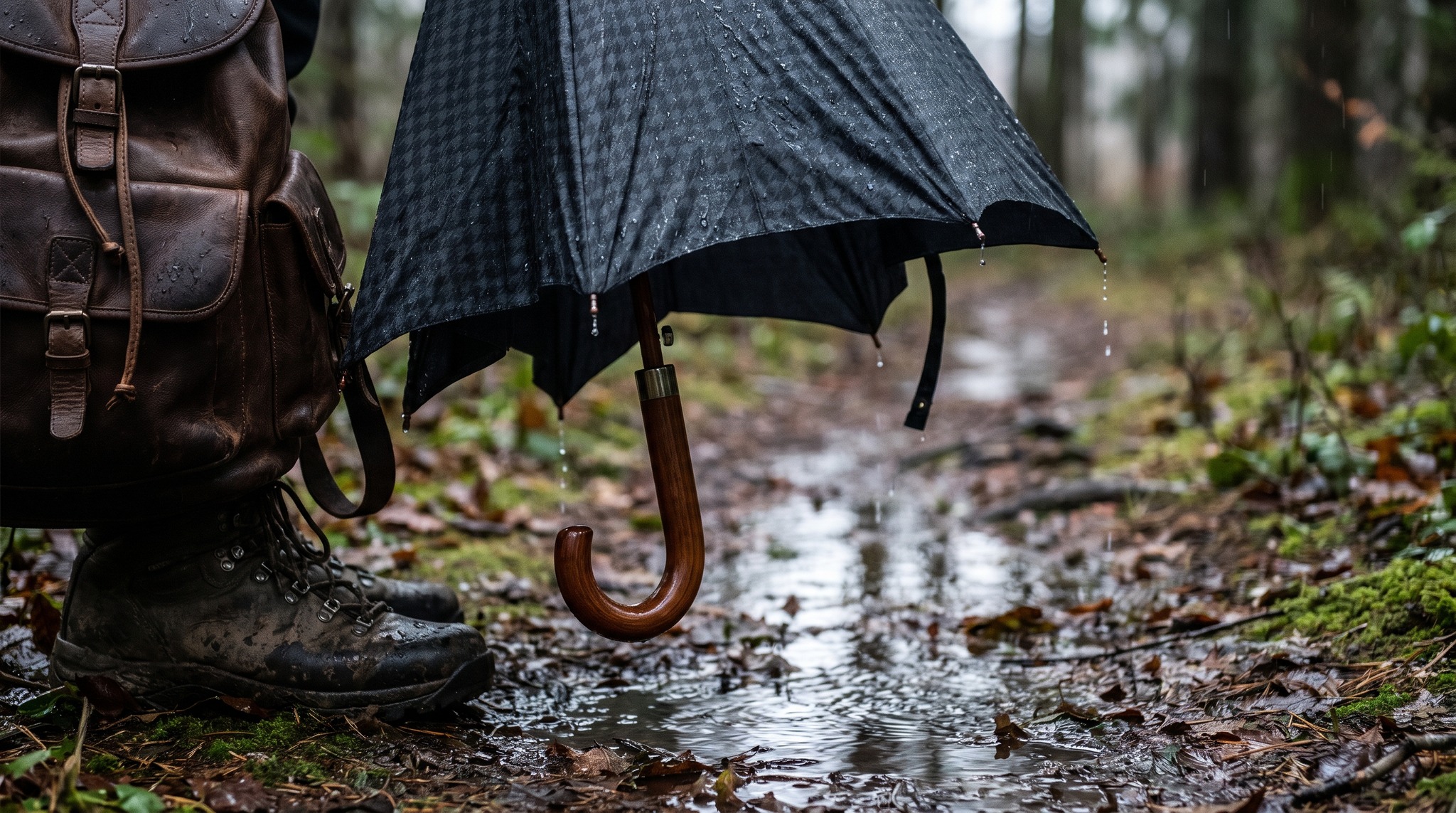
The Umbrella When Hiking: Backpack Carriers, Handle and Weight
When carrying a backpack, you need both hands free in the rain. At the same time, the umbrella should not become a burden when carried for hours. How do you find a model that is compatible with backpack straps, sits securely in your hand and does not add unnecessary weight to your luggage? Which design is suitable for longer tours, and what matters when it comes to handle and frame?
Weight and Packed Size: What Hikers Really Need
A hiking umbrella should weigh between 300 and 450 grams. Lighter models often use aluminium frames with six to eight ribs, heavier ones rely on fibreglass for greater wind resistance. The packed size determines whether the umbrella fits into the side pocket of your backpack: folding umbrellas measure 25 to 30 centimetres when folded, stick umbrellas 85 to 95 centimetres. For multi-day tours, a folding umbrella is recommended, for day hikes a stick umbrella can be attached to the outside of the backpack.
Handle and Handling with Backpack Straps
The handle must sit securely in your hand even when shoulder straps restrict freedom of movement. Curved handles made of wood or plastic allow a firm grip without the hand cramping. Straight handles with a non-slip surface offer an alternative if you want to change hands frequently. Make sure the handle is at least ten centimetres long so that it does not press against the chest strap of the backpack. A wrist strap prevents the umbrella from slipping out of your hand in the wind.
Span and Protection for Backpack and Carrier
The span should be 95 to 110 centimetres so that the backpack also stays dry. Umbrellas that are too large catch more wind and tire the arm more quickly. Models with eight ribs offer a good balance between stability and weight. Polyester canopy dries faster than nylon and is easier to care for after the hike. Dark colours show dirt less clearly, light tones reflect light and increase visibility in fog.
Wind Resistance on Exposed Paths
On ridge trails and open crests, the umbrella must withstand gusts. Fibreglass frames bend in gusts of wind and return to their original shape without breaking. Automatic mechanisms should be robust: a metal spring mechanism lasts longer than plastic parts. Before purchasing, check whether the umbrella can be opened and closed with one hand. This is important if you are hiking with walking poles or need to hold on to railings.
Care After the Tour
After a hike in the rain, the umbrella should dry open before being stored. Mud and dirt can be removed with lukewarm water and a soft brush. The frame benefits from occasional oiling of the hinges. Store the umbrella in a dry place to prevent rust from forming. High-quality Umbrellas last for several years with proper care, even if they are used regularly in the field.
Selection for Different Hiking Styles
For alpine tours, compact folding umbrellas with reinforced frames that can be stowed in the backpack are suitable. Hikers on lowland and low mountain trails often opt for stick umbrellas with a larger span. Men's umbrellas often offer longer handles and more robust frames that are suitable for physically demanding tours. What matters is that the umbrella suits the area of use: a model for city walks is out of place on a mountain trail.
Related: Jewellery, Bags and accessories, Pocket umbrellas. The complete range: Umbrellas.
Related categories: Jewellery, Bags and accessories, Pocket umbrellas. The full range: Umbrellas.
Read more: Umbrellas at Garden Parties: Rain, Lawn and Rows of Chairs, Umbrella and Child Seat: Picking Up in the Rain Without Wet Seats, Cover and Case: Protection for Your Umbrella or a Waste of Space, Handle Length and Body Height: What Fits Ergonomically, Transparent Umbrellas: Visibility, Safety and Cleaning