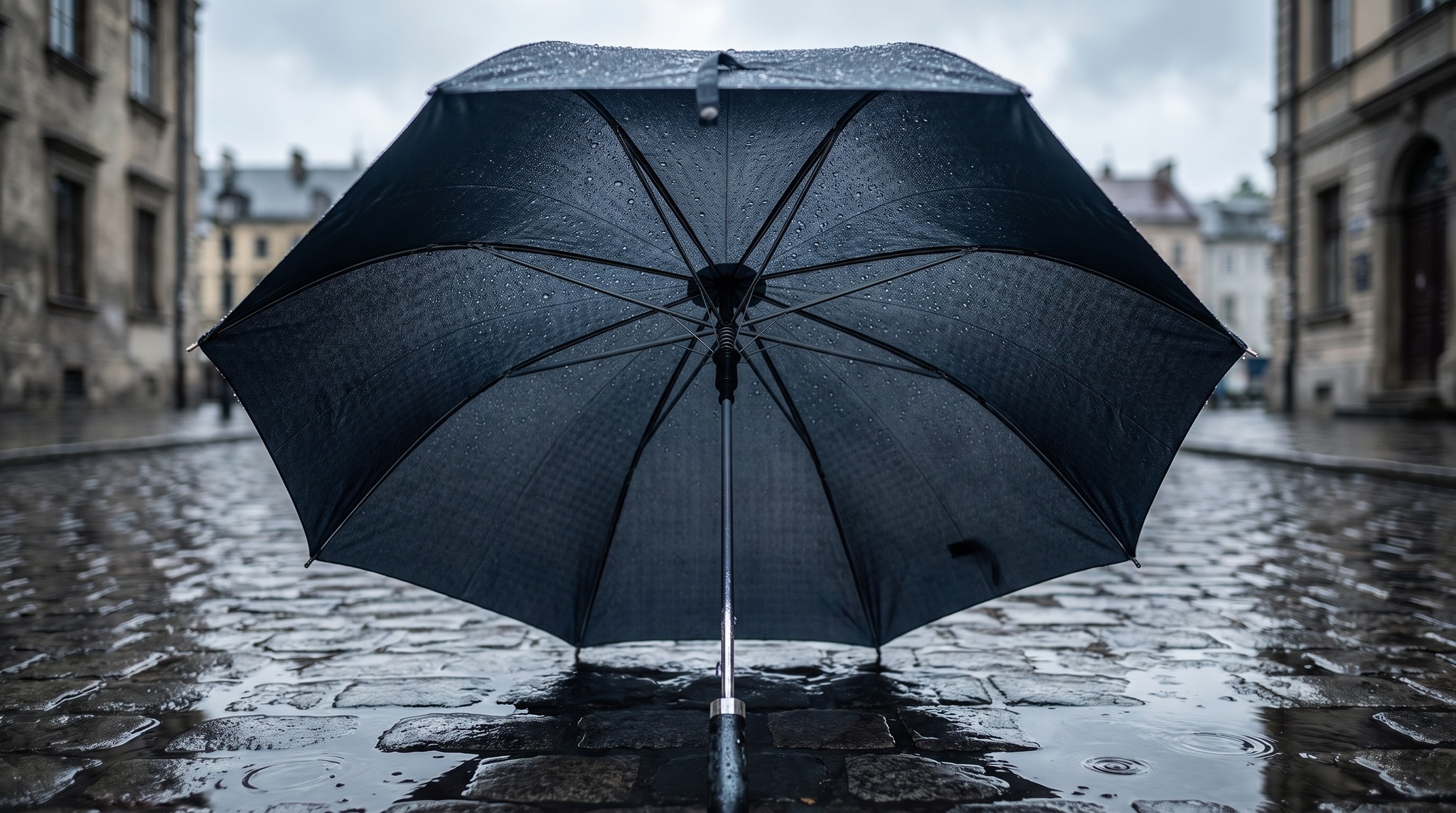
Number of ribs: six, eight or ten in wind
When you want to buy a new umbrella, you will quickly notice that some models have six ribs, others eight or even ten. The number of ribs influences not only the shape of the canopy but also the stability in wind. Which number of ribs makes sense for which conditions? The answer depends on your usage, the weight and the construction of the frame.
Six ribs: lightweight and compact
Pocket umbrellas with six ribs are particularly lightweight and can be folded up to save space. The weight is often between 200 and 350 grams. In moderate wind they offer sufficient protection, as long as the frame is made of fibreglass or high-quality steel. For daily city use in changeable weather, six ribs are usually sufficient. In stronger wind, however, the canopy may flutter or turn inside out if the fabric is not tightly stretched.
Eight ribs: the standard for walking umbrellas
Most walking umbrellas have eight ribs, which allow an even distribution of tension across the entire canopy. The span is typically between 100 and 110 centimetres. Eight ribs offer a good balance between weight and stability: the frame weighs approximately 400 to 600 grams, the canopy sits firmly and curves evenly. In gusty wind up to about force 6, the shape remains stable, provided the ribs are made of fibreglass or a flexible composite material. Many Men's umbrellas rely on this construction because it is robust and practical for everyday use.
Ten or more ribs: maximum wind resistance
Umbrellas with ten or twelve ribs distribute the tensile forces even more finely and create an almost round dome. The canopy fits more tightly, wind gusts find less surface to attack. Such models, however, often weigh over 600 grams and are designed as walking umbrellas. For exposed locations, such as on the coast or in windy city centres, the additional rib is worthwhile. The higher number, however, also means more movable joints that should be maintained regularly to keep them running smoothly.
Material and workmanship play a role
The number of ribs alone says nothing about quality. What matters is the material: fibreglass bends in storms and returns to its original shape, steel is rigid and heavier but durable. The connection between rib and shaft as well as the tension of the fabric also influence wind resistance. A well-made umbrella with six fibreglass ribs can be more stable than a cheap model with eight thin steel ribs. Look for double-stitched seams and a firmly fitted cap at the tip.
Rule of thumb for choosing the number of ribs
For everyday use in the city, six to eight ribs are sufficient if you value low weight. Those who are frequently out in strong wind or prefer a large walking umbrella should choose eight to ten ribs. More than ten ribs are rarely necessary unless you are specifically looking for a storm umbrella for extreme conditions. In any case, after use in rain you should let the Umbrellas dry open so that the joints do not rust and the fabric retains its tension.
Related items: Jewellery, Bags and accessories, Pocket umbrellas. The complete range: Umbrellas.
Related categories: Jewellery, Bags and accessories, Pocket umbrellas. The full range: Umbrellas.
Read more: Umbrellas on the Underground: Wet Fabric, Tight Spaces and Consideration, Colour Fastness: What Rain and UV Do to Fabrics, Umbrella Fabrics in the Rain: Polyester, Satin and Coated Materials, Pagoda Umbrellas: The Most Striking Shape an Umbrella Can Have, Umbrella for Two People: Which Size Is Sufficient