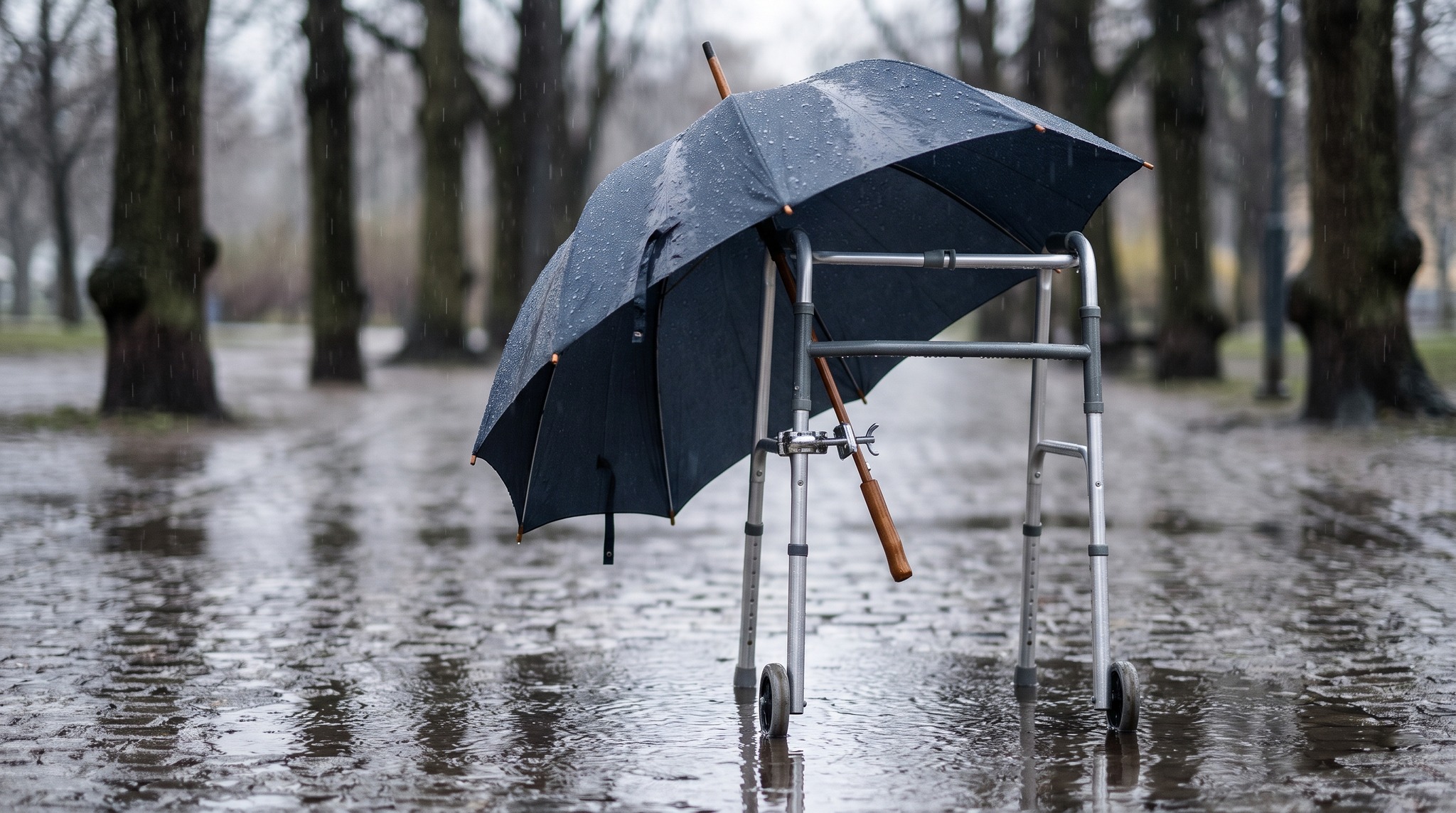
The Umbrella When Walking with a Rollator: Grip, Balance and Visibility
Anyone using a rollator needs both hands for secure hold and steering when it rains. At the same time, an umbrella should provide reliable protection from moisture without obstructing visibility or compromising balance. Which characteristics make an umbrella suitable for this situation, and what should you look for when purchasing?
Holder on the Rollator Instead of in the Hand
Most rollators offer options for attaching an umbrella: either via a clamp holder on the frame or via special adapters. The umbrella should have a straight shaft without strong curvature so that it sits securely in the holder. A walking umbrella with an overall length between 85 and 95 centimetres can usually be mounted without problems and offers sufficient coverage. Make sure that the handle is not too bulky, otherwise it will not fit into standard clamping systems.
Span and Weight for Safe Travel
An umbrella that is too large catches a lot of wind and can cause the rollator to sway. A span of 100 to 110 centimetres is usually sufficient to protect the upper body and seat without affecting driving stability. The weight should not significantly exceed 400 grams, so that the rollator does not become top-heavy. Umbrellas with fibreglass ribs offer a good compromise here: they are lightweight, flexible in gusts of wind and break less frequently than steel frames.
Automatic or Manual Opening Mechanism
An automatic umbrella opens at the push of a button, which is practical if you only insert the umbrella into the holder shortly before setting off. However, the canopy springs open abruptly, which can slightly shift the rollator when the umbrella is mounted. A manually opening umbrella requires both hands but gives you more control over the process. If you open and attach the umbrella at home in peace, the automatic mechanism no longer matters when you are out and about.
Transparent Segments for Better Visibility
Some models have one or two transparent segments in the canopy, usually made of PVC or polyester with a clear coating. These windows allow you to see ahead without lifting the umbrella or tilting your head sharply. This increases safety in traffic and on uneven paths. Make sure that the transparent areas are not too small: a diameter of at least 20 centimetres per segment is advisable.
Care After Use
After your walk, you should let the umbrella dry open before folding it again. Moisture when closed leads to mildew stains on the canopy and can cause metal parts to rust. If you would like to carry a Pocket umbrellas as a backup, store it in the rollator bag: this way you have an emergency solution at hand in case of sudden rain, even if the main umbrella is not currently mounted.
Wind Resistance and Number of Ribs
An umbrella with eight ribs offers sufficient stability for normal rainy days. For frequent trips in windy areas, a model with ten or twelve ribs is worthwhile: the closer spacing distributes wind pressure more evenly and reduces the risk of the canopy turning inside out. Double canopies with air vents between two fabric layers channel gusts in a controlled manner and additionally relieve the construction.
Related: Jean Paul Gaultier, Pagoda umbrellas, Romantic. The complete range: umbrellas.
Related categories: Jean Paul Gaultier, Pagoda umbrellas, Romantic. The full range: Umbrellas.
Read more: Umbrellas at Evening Events: Cloakroom, Evening Gown and Appearance, Umbrella and Business Look: Suit, Briefcase and Overall Impression, Patterns and Visibility: What Really Stands Out in Traffic, Colour Fastness: What Rain and UV Do to Fabrics, Umbrella for Two People: Which Size Is Sufficient