Umbrellas and Gloves: Material, Grip and Wet Fingers
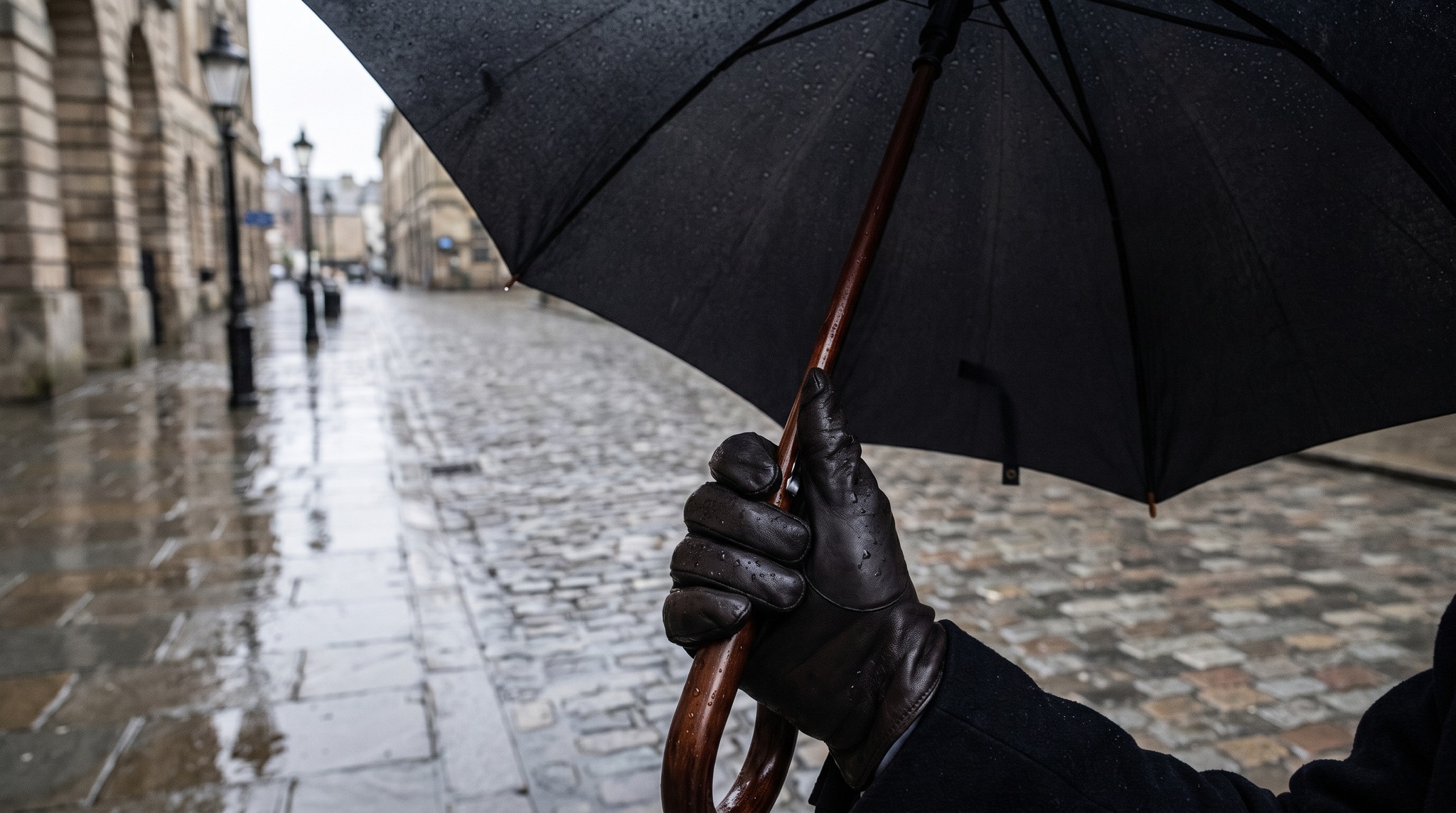
Anyone who wears gloves in the rain knows the problem: the grip slips, wet fingers get cold, and the umbrella suddenly feels uncomfortable in your hand. Yet it is precisely the combination of handle material and glove surface that determines whether you can hold the umbrella securely or have to keep readjusting your grip. Which materials work well together, and what should you look for when purchasing if you regularly use gloves?
Handle Material and Slip Resistance
Wood, leather, plastic and metal react differently to wet or gloved hands. Wooden handles provide good grip even when wet, as the natural texture remains perceptible even through thin leather gloves. Leather coverings adhere well to textile gloves, but can become slippery with smooth leather gloves. Lacquered metal handles or smooth plastic surfaces lose considerable grip when wet, especially if the glove itself has a water-repellent coating.
Handle Shape for Secure Hold
The shape of the handle influences handling at least as much as the material. Curved crook handles sit more securely in the crook of your hand and can be hooked over your forearm if you need both hands free briefly. Straight knob handles require a firmer grip, which can become tiring with thick winter gloves. Ergonomically shaped handles with recesses for the fingers provide secure hold even with gloves, provided the glove size matches the handle geometry. With Men's umbrellas you will often find larger handle diameters designed for stronger hands and thicker gloves.
Glove Material and Grip
Not every glove is equally suitable for carrying an umbrella. Smooth leather slips easily on lacquered handles, while suede or nubuck offers considerably more grip. Textile gloves with rubber dots on the inner surface grip reliably, but can chafe on rough wood with prolonged use. Thin, close-fitting gloves allow better control over the umbrella than thick mittens, where you can barely feel the handle.
Wet Fingers and Heat Dissipation
Metal handles conduct cold strongly, which becomes uncomfortable with wet gloves. Wood and plastic insulate better and feel more comfortable even during prolonged use. When water runs between glove and handle, fingers cool down more quickly. Water-repellent gloves with a tight seal at the wrist prevent rainwater from running down your arm and entering the glove. An umbrella with sufficient span protects not only your upper body but also your outstretched hand from splashing water.
Practical Tips for Everyday Use
Before purchasing, test whether you can grip the handle well with your usual gloves. Make sure the opening mechanism is easy to operate even with gloves. Automatic buttons should be large enough to feel through the fabric. With Umbrellas featuring a sliding mechanism, check whether you can apply enough force without your hand slipping. After use, you should allow both umbrella and gloves to dry so that leather handles do not swell and textile gloves retain their shape.
Care of Handle and Gloves
Wooden handles benefit from occasional treatment with wood oil or beeswax, which keeps the surface supple and protects against moisture. Leather handles can be treated with leather care products, but should never dry while soaked. Gloves made of leather or textile dry best at room temperature, not on the radiator. This preserves the fit, and you will have a secure grip on your next rainy journey.
Related items: Jewellery, Bags and accessories, Pocket umbrellas. The complete range: Umbrellas.
Related categories: Jewellery, Bags and accessories, Pocket umbrellas. The full range: Umbrellas.
Read more: Umbrellas at Concerts: Cloakroom, Seating and Intervals, Shopping in the Rain: Umbrella, Bags and Both Hands Free, Handles Made of Wood, Horn and Acrylic: Materials for Umbrellas, The Wedding Umbrella: When It Rains on the Big Day, Patterns and Visibility: What Really Stands Out in Traffic