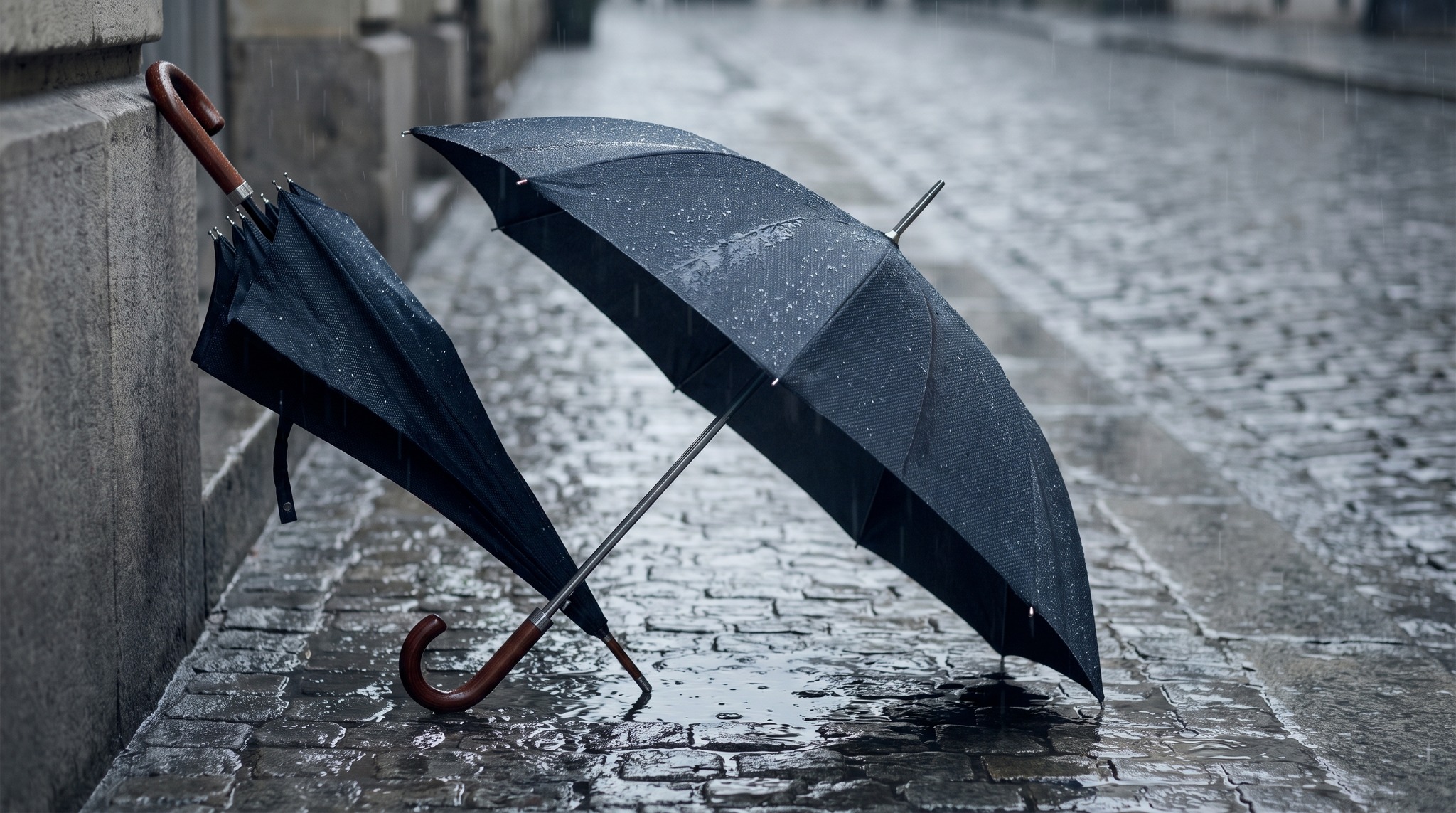
Umbrellas for Photography: Free Hands and Stability
When you are out with your camera and rain approaches, you face a practical problem: How do you protect your equipment without sacrificing mobility and quick response? An umbrella must reliably cover camera and lens during photography, but must not get in the way. The question is which design is suitable and what you should pay attention to regarding handle, weight and span, so that you have both hands free or can hold the umbrella securely.
Walking Umbrella or Pocket Umbrella: A Question of Span
For the protection of camera and photographer, the span is decisive. Walking umbrellas with 100 to 110 centimeters diameter offer sufficient area to cover body and equipment simultaneously. Pocket umbrellas with 90 to 95 centimeters are sufficient for compact system cameras, but with larger lenses it becomes tight. Weight plays a role when you are out for longer periods: models between 300 and 400 grams can be held easily with one hand without the arm tiring.
Handle Shapes for One-Handed Guidance
A straight wooden handle or an ergonomically shaped plastic handle sits securely in the hand and can be clamped between shoulder and head if necessary. Hook handles made of maple or chestnut additionally offer the possibility of hooking the umbrella onto your forearm when you briefly need both hands for the camera. Make sure that the handle is non-slip and has no sharp edges that interfere with holding.
Wind Stability and Number of Ribs
When photographing outdoors, wind stability is important so that the umbrella does not tilt or rotate. Umbrellas with eight ribs made of fibreglass or steel offer a good balance between stability and weight. Fibreglass flexes in gusts and returns to its original shape, steel ribs are stiffer but heavier. Models with ten or more ribs are very stable in shape, but often weigh over 500 grams.
Canopy: Water-Repellent and Quick-Drying
Polyester with Teflon coating reliably repels water and dries quickly after use. This is important if you want to fold the umbrella between two shots and store it in your camera bag. Dark colours such as black or navy blue reflect less light and do not interfere when you work in diffuse light. Light or patterned covers can cause colour casts if you hold the umbrella close over the subject.
Care After Use in Rain
Open the umbrella fully after the photo session and let it dry in an airy place. Moisture that remains in the frame can lead to rust on metal ribs. Check the mechanism regularly: spring tension, slider and locking should move smoothly. Remove dirt on the canopy with a damp cloth, aggressive cleaners attack the waterproofing.
Practical Notes for On the Go
Carry the umbrella within easy reach on your backpack or in an outer pocket, not deep in your luggage. A model with automatic opening can be deployed faster than a manual umbrella. If you frequently photograph in drizzle, a light pocket umbrella is sufficient. In prolonged heavy rain, a walking umbrella with a large span is the better choice, even if it takes up more space.
Related: Jean Paul Gaultier, Pagoda umbrellas, Romantic. The complete range: Umbrellas.
Related categories: Jean Paul Gaultier, Pagoda umbrellas, Romantic. The full range: Umbrellas.
Read more: The Umbrella in a Restaurant: Cloakroom or at the Table, Patterns and Visibility: What Really Stands Out in Traffic, Automatic or Manual Opening: The Difference in Use, Span, Length, Weight: the Measurements That Matter in Daily Use, Umbrella in Drizzle: When Size Becomes Excessive