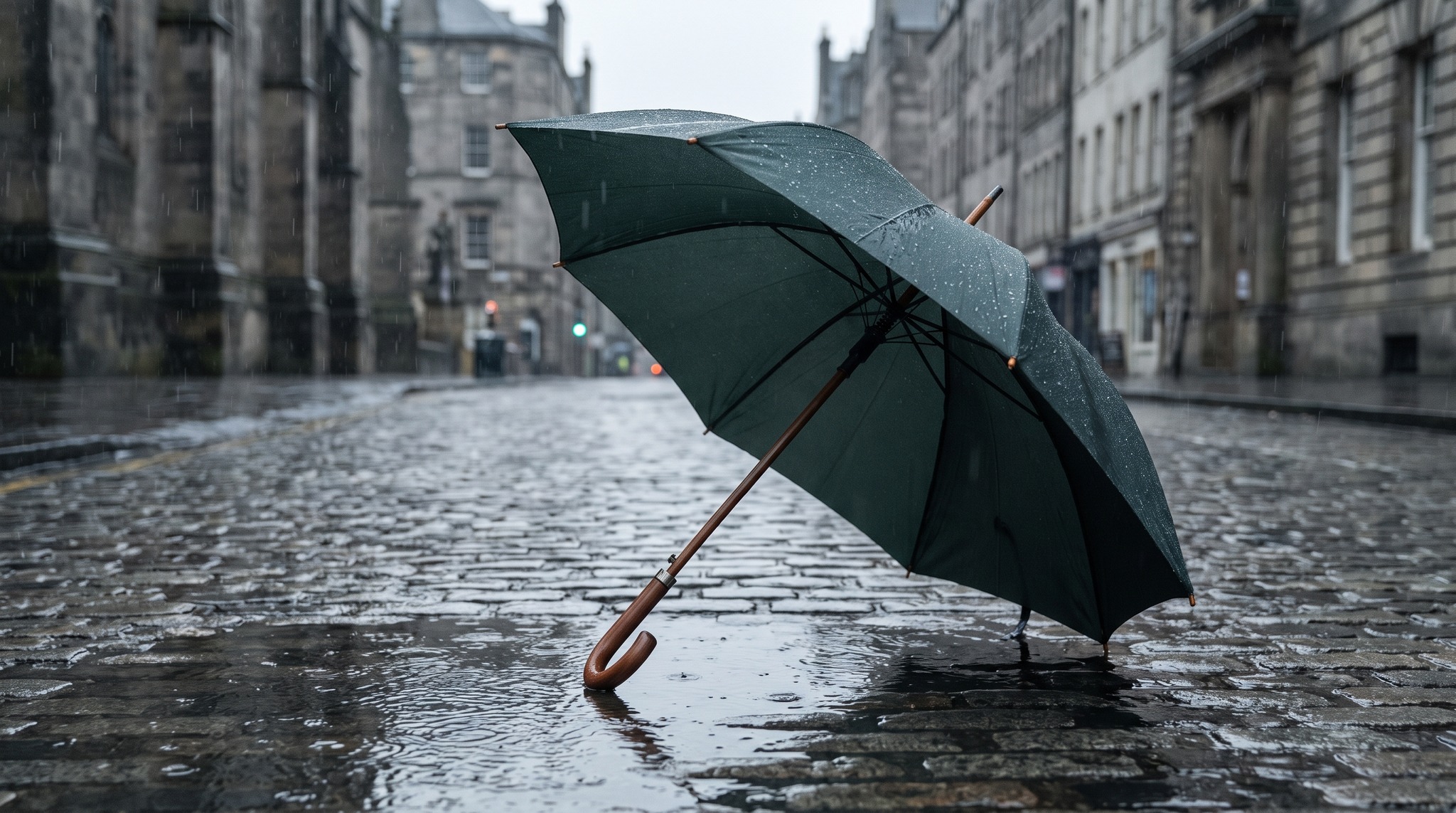
Umbrellas in Rain and Wind: When Size Becomes a Problem
Many people automatically reach for the largest umbrella in the cupboard when the weather turns bad. The reasoning seems logical: more surface area means more protection. However, when rain and wind combine, this advantage often turns into the opposite. An oversized umbrella becomes a target for gusts and can bend, turn inside out, or be torn from your hand. The question is therefore: which size truly protects, and at what point does the diameter become a problem?
Wind Load Increases with Surface Area
The physics are clear: the larger the canopy, the more force acts on the frame in windy conditions. A walking umbrella with a 120 centimetre span may keep your shoulders dry, but at wind force 5 it already catches several kilograms of pressure. Models with a 100 to 110 centimetre diameter reduce this load noticeably without leaving your head wet. Those who frequently travel in windy city centres or along the coast should deliberately limit the span. A compact umbrella with eight or nine fibreglass ribs absorbs gusts better than a large model with six steel ribs.
Weight and Handling in Storms
A heavy walking umbrella may feel more solid in the hand, but with sudden gusts the weight becomes a disadvantage. The frame tilts sluggishly, the handle twists, and control is lost. Lighter folding umbrellas with aluminium frames and firm grips can be adjusted more quickly. Balance is crucial: an umbrella around 400 grams with an ergonomic handle enables quick reactions without tiring the hand. Models over 600 grams require more strength and become strenuous during extended use.
Ribs and Construction for Wind Stability
The number and material of the ribs determine how well an umbrella distributes wind loads. Eight fibreglass ribs bend under pressure and return to their original shape. Six steel ribs may withstand more static force, but buckle permanently when overloaded. High-quality Umbrellas often combine both materials: fibreglass in the outer ribs for flexibility, steel in the shaft for stability. Look for double-stitched seams at the rib ends. This is where the canopy tears first in storms if the workmanship is careless.
Automatic and Manual Opening Compared
Automatic umbrellas open at the push of a button in fractions of a second. This speed is practical when getting out of the car, but becomes a risk in wind. The umbrella unfolds uncontrollably before you can orient it. Manual models allow controlled opening: you open the umbrella only as far as wind conditions permit, keeping it aligned with the wind direction. In gusts of force 6 or above, you should manually close any umbrella before it sustains damage. An automatic umbrella with a wind vent in the canopy channels air currents in a controlled manner and prevents inversion.
Practical Guidelines for Umbrella Selection
For everyday use in the city, a span of 95 to 105 centimetres is perfectly adequate. This size protects the upper body and bag whilst remaining manageable in crowds and wind. Those who walk longer distances should choose 105 to 115 centimetres. Beyond this, the umbrella becomes bulky and susceptible to wind. When selecting high-quality Umbrellas, you should look for the following features:
- Span between 95 and 110 centimetres for everyday practicality
- At least eight ribs, ideally made of fibreglass
- Weight under 500 grams for extended carrying
- Handle with non-slip surface and ergonomic shape
- Double-stitched canopy at all rib ends
Care After Wind and Rain
After use in stormy conditions, you should fully open the umbrella and allow it to dry. Moisture in the folds leads to mildew and weakens the fabric. Check the ribs for bends and the seams for tears. Small damage can often be repaired with textile adhesive before it worsens. Store the umbrella loosely rolled, not tightly bound. This way the canopy retains its tension and the frame does not warp.
Related: Chantal Thomass, Designer umbrellas, Guy De Jean. The complete range: Umbrellas.
Related categories: Chantal Thomass, Designer umbrellas, Guy De Jean. The full range: Umbrellas.
Read more: The Umbrella in the Hotel Room: Where to Put It After the Rain, Wedding Umbrellas for Guests: Quantity, Size and Coordination, Rain on Your Wedding Day: What Should Be Clarified in Advance, Jean Paul Gaultier: Folding Umbrellas with Patterns for Style-Conscious Customers, Drying and Storing a Wet Umbrella Properly: Care for Longevity