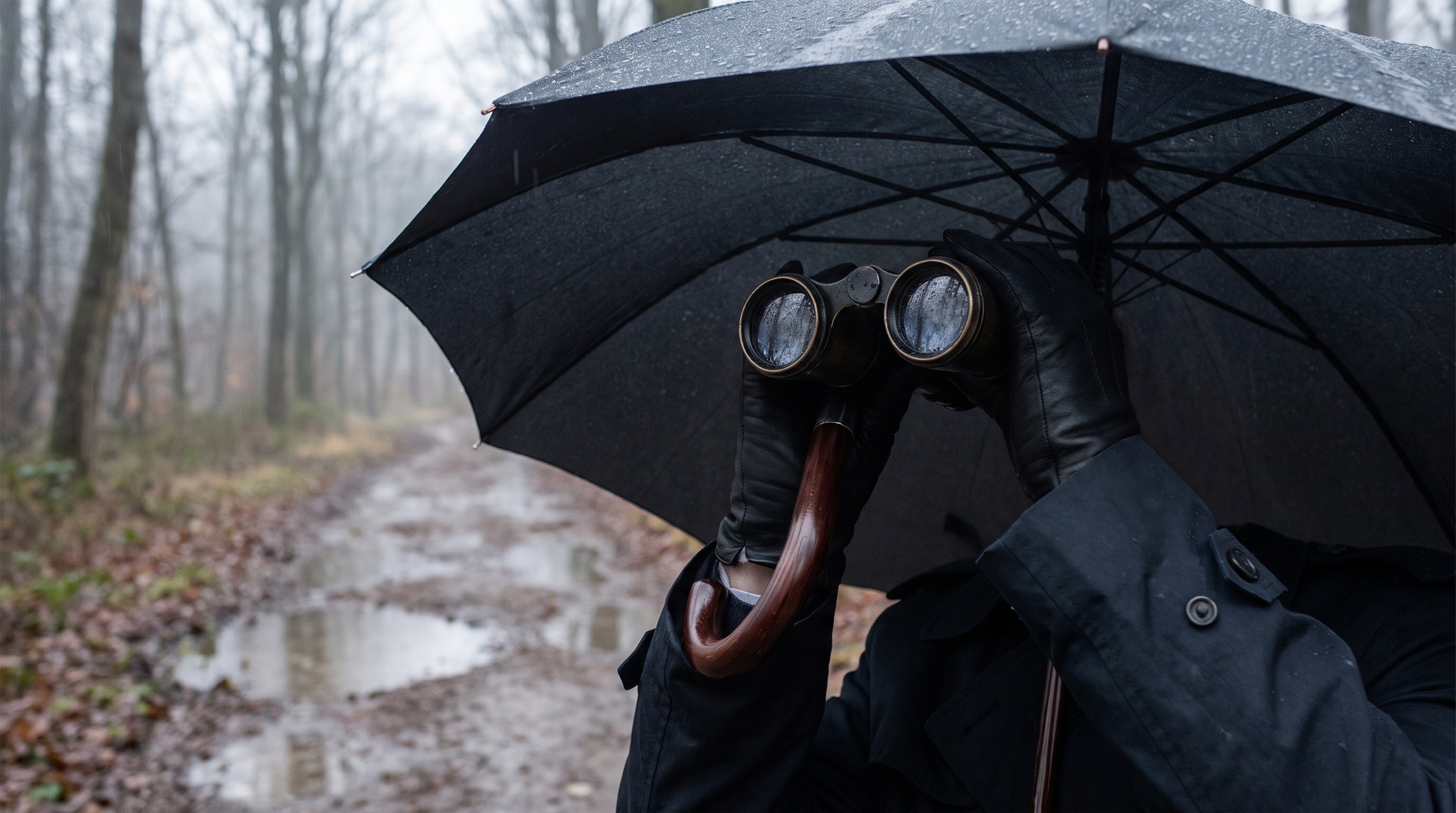
Umbrella and Binoculars: Optics, Raindrops and Birdwatching
Those who observe birds in nature rarely plan their outings according to the weather. Particularly in autumn and spring, when migratory birds rest or waterfowl are active, rain often falls. This raises the question: How do you protect binoculars and spotting scopes from moisture without getting soaked yourself? And what characteristics must an umbrella have so that it does not become a burden during hours of observation?
Why Moisture Damages Optics
Modern binoculars are often waterproof coated, but raindrops on the lenses immediately degrade the image. Fogged eyepieces or water streaks force constant wiping, which damages the coating over time. An umbrella keeps the optics dry and saves time: Instead of cleaning every few minutes, the view remains clear. It also protects expensive spotting scopes, whose objective diameters of 80 millimetres and more are particularly vulnerable to splashing water.
Walking Umbrella Instead of Pocket Umbrella
For birdwatching, a walking umbrella with a large span is significantly better suited than a compact model. A span of at least 100 centimetres covers head, shoulders and the binoculars held in front of the body. The fixed handle can be comfortably tucked into the crook of the arm or wedged between neck and shoulder, leaving both hands free. High-quality Umbrellas with wooden handles or moulded plastic handles offer more grip than smooth round handles. The weight should be under 500 grams so that the arm does not tire during extended observation.
Dark Colours for Inconspicuous Observation
Birds react to movement and contrasts. An umbrella in subdued colours such as dark green, brown or black is less conspicuous in the field than bright tones. Matte polyester canopies also reflect less light than shiny materials. Those who regularly visit bodies of water or forests should choose a model without conspicuous patterns. Among Men's umbrellas you will find many simple, robust designs suitable for outdoor use.
Wind Stability in Open Terrain
Birdwatching often takes place in exposed locations: dykes, lakeshores, wetland meadows. There the wind blows unimpeded. An umbrella with eight or more fibreglass ribs absorbs gusts better than models with six steel ribs. Fibreglass bends under pressure and returns to its original shape instead of breaking. Look for double-stitched seams on the canopy and reinforced tips: These details determine whether the umbrella lasts a season or tears after a few uses.
Care After Use in the Rain
After observation, you should let the umbrella dry open before storing it. Moisture in the folds leads to mildew and eventually dissolves the waterproofing. Remove mud or plant residue from the frame with a damp cloth. Rinse off salt water, for example at the coast, with clear water to prevent corrosion. A well-maintained umbrella with a robust frame will accompany you into the field in all weather for years to come.
Related items: Jewellery, Bags and accessories, Pocket umbrellas. The complete range: Umbrellas.
Related categories: Jewellery, Bags and accessories, Pocket umbrellas. The full range: Umbrellas.
Read more: The Umbrella for Real Estate Agents: Property Viewings in the Rain, The Umbrella for Street Musicians: Instrument, Hat and Audience, Umbrella on the Train: Luggage Rack, Consideration and Moisture, Umbrella on a City Walk: Pace, Distance and Oncoming Traffic, Pagoda Shape and Classic Dome: Avoiding Rain on the Neck