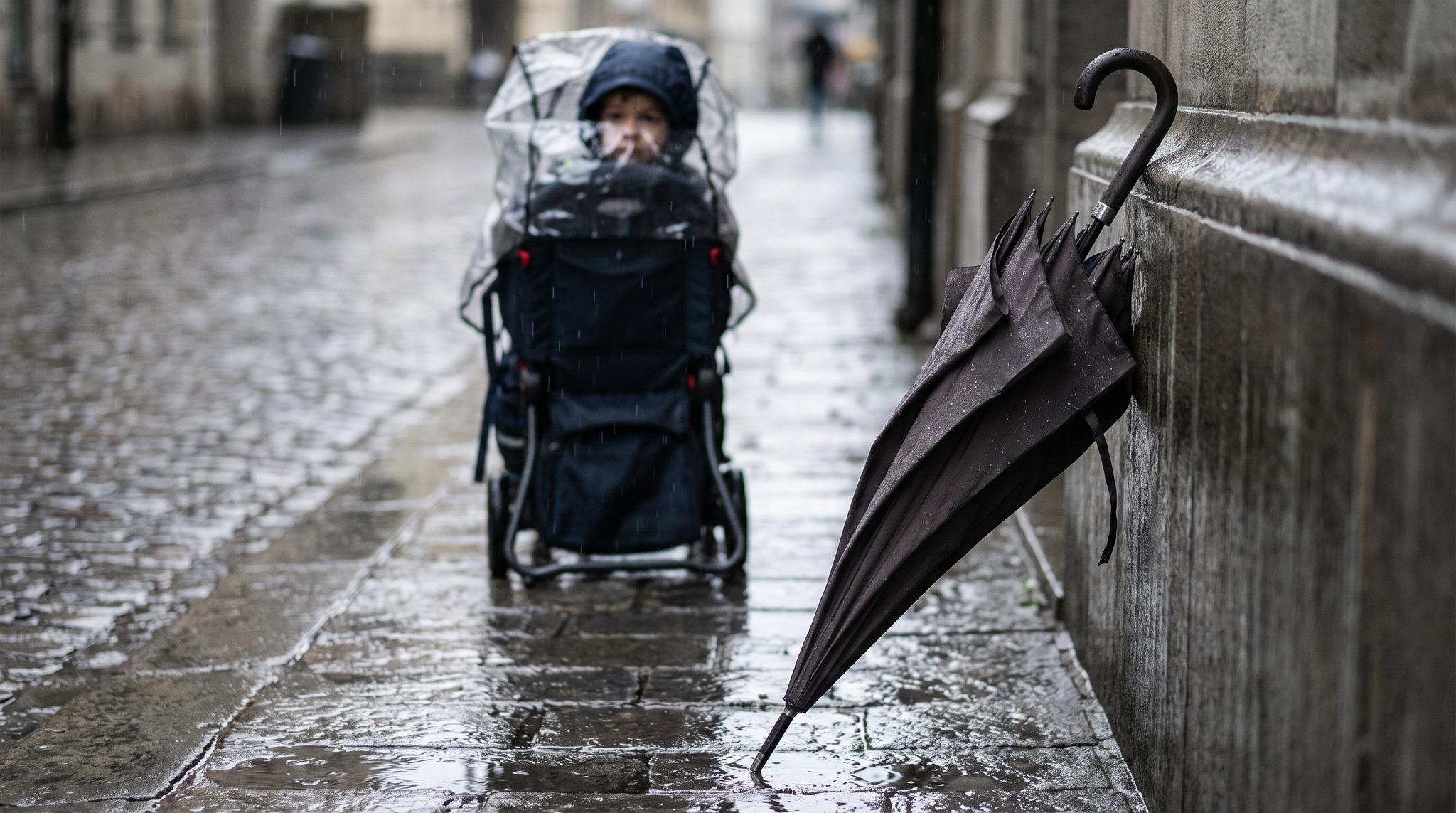
Umbrella and Child Carrier: Backpack, Head Height and Rain Protection
When you are out with your child in a back carrier and it starts to rain, you face a practical question: How do you keep both of you dry without the umbrella getting in the way or the child bumping into the shaft? The combination of child carrier and umbrella requires well-thought-out solutions, because the child sits considerably higher than your own head. In addition, you must hold the umbrella in such a way that it neither restricts your freedom of movement nor obstructs your view.
Why Head Height is Crucial
In a back carrier, the child sits approximately 20 to 30 centimetres above the top of your head. A normally held stick umbrella with a 100 to 110 centimetre span will cover you, but leaves the child's head and upper body in the rain. You must therefore tilt the umbrella further back or choose a model with a larger diameter. Make sure that the umbrella offers a span of at least 110 centimetres, preferably 120 centimetres, so that both people remain within the protected area.
Stick Umbrella or Folding Umbrella: Which Works Better
A stick umbrella with a straight handle can be held more stably and guided more securely in wind. You can guide it backwards over your shoulder with one hand, while the other hand remains free. Folding umbrellas are more compact, but usually offer a smaller span and less stability in gusts. For hikes with a child carrier, Umbrellas with eight or more ribs and a frame made of fibreglass or steel are suitable, as they withstand wind gusts better.
Practical Holding Techniques for On the Go
Hold the umbrella slightly angled over your shoulder, tilted backwards, so that the canopy spans over the child. The handle rests on or just behind your shoulder. This position shifts the weight of the umbrella backwards and partially balances the load of the carrier. On longer stretches, you can occasionally switch the umbrella to the other shoulder to avoid one-sided strain. An umbrella with an ergonomically shaped handle, such as wood or padded plastic, sits more comfortably in your hand.
Weight and Material: What You Should Consider
A lightweight umbrella weighing 300 to 400 grams makes carrying considerably easier when you already have 10 to 15 kilograms of child and carrier on your back. Aluminium or fibreglass frames offer a good balance of stability and weight. The cover should be made of tightly woven polyester or coated nylon, so that water runs off quickly and the fabric dries rapidly after use. Pay attention to good workmanship of the seams, as these form the weak points in prolonged rain.
Safety and Visibility in Everyday Use
- Choose an umbrella in a bright colour or with reflective elements, so that you are more visible in traffic.
- Check before opening that there are no branches, lamp posts or other obstacles in the way.
- Hold the umbrella so that you maintain a clear view ahead and the child does not bump into the shaft or ribs.
- Fold the umbrella briefly in narrow passages or in strong wind to avoid accidents.
Care After Use
Shake out the umbrella after your hike and leave it open in an airy place to dry before storing it. Moisture when closed promotes mildew and attacks the coating. Occasionally clean the frame with a damp cloth to remove dirt and salt, which can strain the mechanism. This way, your umbrella will remain reliable over many outings.
Related: Chantal Thomass, Designer umbrellas, Guy De Jean. The complete range: Umbrellas.
Related categories: Chantal Thomass, Designer umbrellas, Guy De Jean. The full range: Umbrellas.
Read more: Umbrella When Refuelling: Fuel Nozzle, Display and Wet Hands, Umbrella and Bicycle Trailer: Keeping Your Child Dry While Coupling, The Umbrella When Walking with a Rollator: Grip, Balance and Visibility, Umbrella and Laptop Bag: Protection from Moisture for Electronics, Umbrella when pushing a pram: grip, steering and one hand