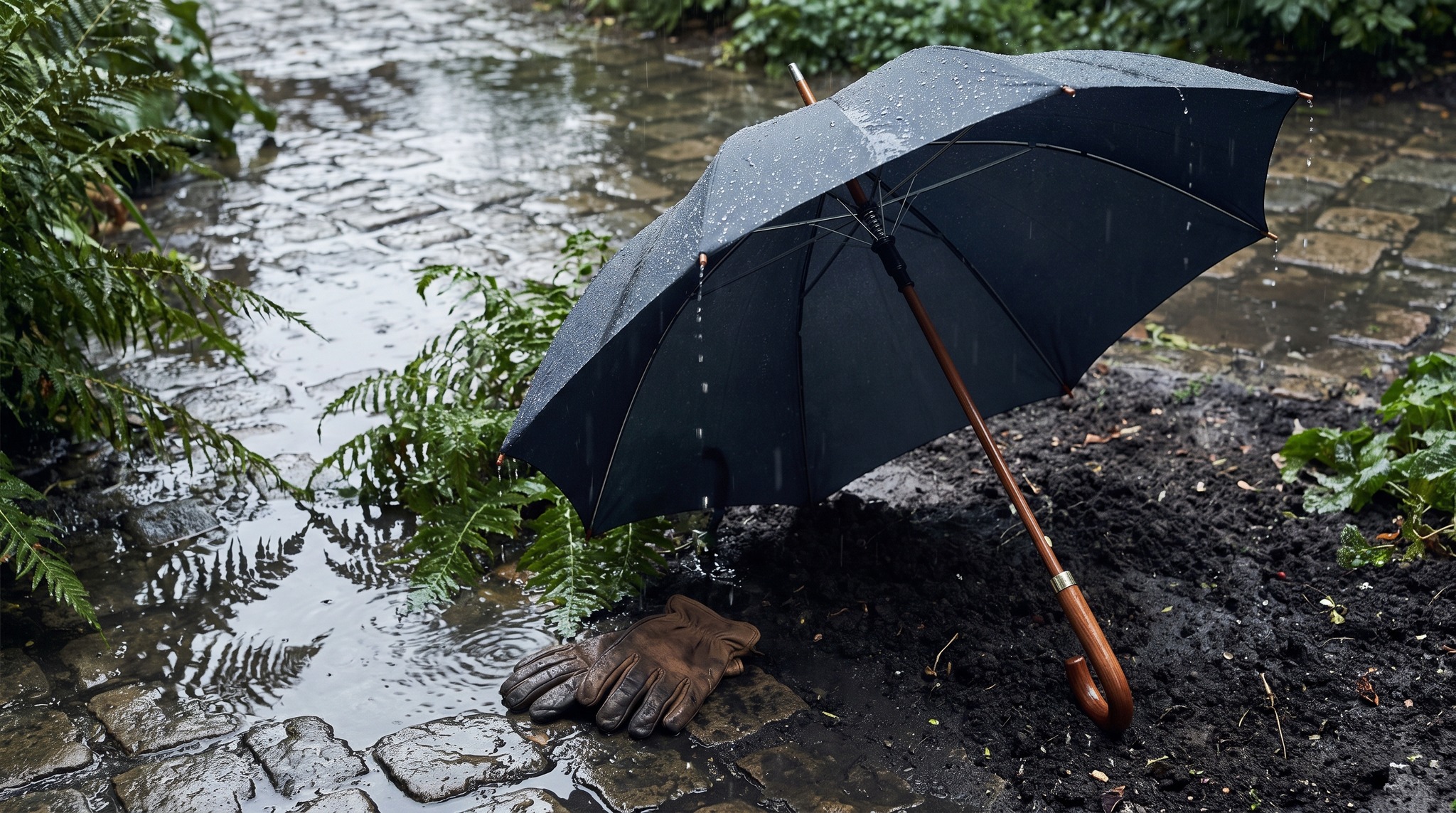
Umbrella and Gardening: Planting in Drizzle
Anyone planting perennials or bulbs in spring or autumn knows the situation: the soil is moist and workable, but light rain is falling. Especially during longer planting sessions, the wetness becomes uncomfortable, and an umbrella seems impractical because both hands need to be free. How can an umbrella still be used effectively without getting in the way when bending, digging or watering? Which models are suitable for outdoor work where you need to move around whilst staying dry?
Walking Umbrella with Long Handle for Free Hands
A walking umbrella with a straight handle can be wedged between shoulder and neck or tucked into a jacket pocket, leaving both hands free for work. Models with a length of 85 to 95 centimetres offer sufficient span to protect upper body and back whilst you kneel or bend forward. Look for a frame made of fibreglass or steel with at least eight ribs, so the umbrella remains stable in gusty wind and does not flip inside out.
Pagoda Umbrella for Additional Stability
The slightly upward-curved edges of a pagoda umbrella ensure that gusts of wind are better deflected and the umbrella does not slip from your hand as easily. This shape is particularly practical when you want to set the umbrella down briefly, for example next to the planter or leaning against the garden fence. High-quality Pagoda umbrellas often have a diameter of 100 to 110 centimetres and weigh between 400 and 550 grams, making them manageable enough for outdoor use.
Material and Care After Use
For gardening in drizzle, umbrella canopies made of polyester or pongee silk with water-repellent coating are suitable. These materials dry quickly and can be rinsed with clean water after use if soil or plant residue adheres to them. Open the umbrella fully after work and allow it to dry in an airy location before folding it up. This prevents mildew spots and preserves the waterproofing for longer.
Handle Shape for Secure Grip in Wet Conditions
A curved crook handle made of wood or plastic sits securely in the hand even with damp gardening gloves and can be hooked over the wrist if necessary. Rubberised or ribbed surfaces provide additional grip when hands are wet or muddy. Avoid smooth metal handles, as these become slippery when wet and feel cold.
When an Umbrella Makes More Sense Than Rainwear
In light drizzle or brief showers, an umbrella is often more comfortable than a rain jacket, which quickly leads to heat build-up during physical work. You can use the umbrella flexibly when wetness increases and set it aside as soon as the rain eases. For longer planting sessions, the combination of weather-resistant Umbrellas with at least ten ribs and a lightweight, breathable overjacket covering only shoulders and arms is recommended.
Practical Rule of Thumb for Garden Use
For outdoor work, choose an umbrella that combines the following features:
- Span of at least 100 centimetres for adequate protection when bending
- Weight under 600 grams, so it does not tire you when held for longer periods
- Frame with eight or more ribs for wind stability
- Handle made of non-slip material that can be gripped securely even with gloves
- Canopy made of quick-drying polyester or coated fabric
Related items: Jewellery, Bags and accessories, Pocket umbrellas. The complete range: Umbrellas.
Related categories: Jewellery, Bags and accessories, Pocket umbrellas. The full range: Umbrellas.
Read more: The Umbrella During Tyre Changes: Tools, Ground and Wet Conditions, The Umbrella at the ATM: Keypad, Moisture and Discretion, Span, Length, Weight: the Measurements That Matter in Daily Use, Umbrellas During a Move: Protecting Boxes, Rain and Helpers, Umbrella and Smartphone: Operating in Rain with One Hand