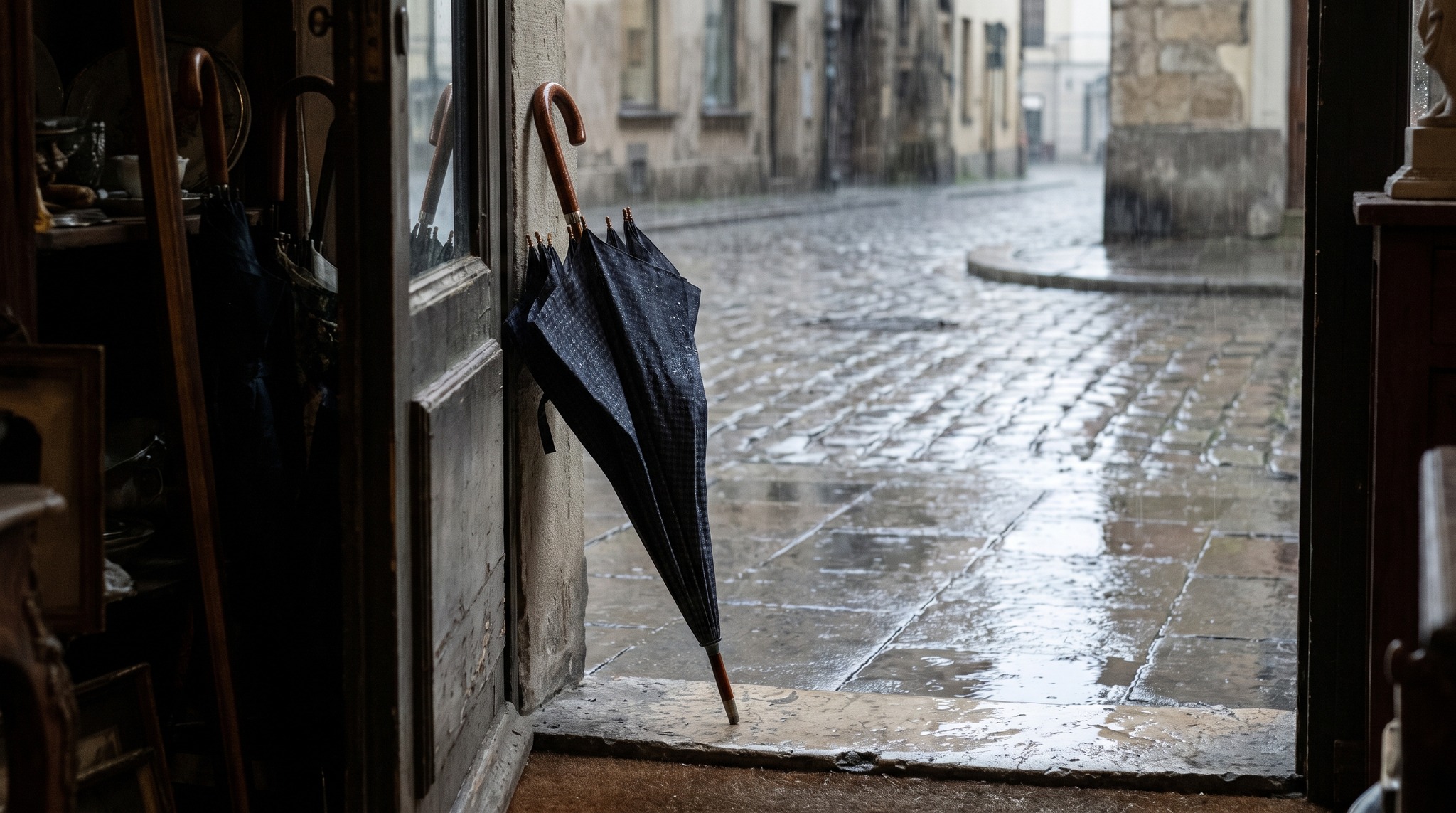
The Umbrella at the Antique Dealer: Narrow Spaces, Merchandise and Caution
Anyone entering an antique shop with a high-quality umbrella faces a particular challenge. The aisles are often narrow, the shelves full of delicate objects, and your own umbrella can quickly become a hazard to porcelain, glass or old frames. How do you carry your umbrella safely without damaging the merchandise or restricting yourself? This article shows what matters.
Why Antique Shops Require Special Attention
Antique dealers often present their merchandise in close proximity. Display cases, chests of drawers and shelves stand close together, often the space between two pieces of furniture is barely enough for one person with outstretched arms. A walking umbrella measuring 100 to 110 centimeters in length extends far beyond the body, an open folding umbrella with a 90 centimeter span takes up considerably more space than the carrier. In such rooms, one careless turn is enough to brush against or knock over an object.
Carrying a Walking Umbrella Vertically or Horizontally
The safest method is to carry it vertically with the tip pointing downward, held close to the body. This keeps the umbrella controllable and takes up hardly any additional space. Avoid carrying it horizontally under your arm, as the umbrella then swings out far to the side and you cannot keep the tip in view. If you own an umbrella with a hooked crook handle, you can hang it on your wrist if necessary, but make sure the handle does not catch on furniture edges. With Designer umbrellas featuring elaborate handles made of wood or metal, particular caution is required, as these are often wider than standard handles.
Folding Umbrella: Small but Not Invisible
A folded pocket umbrella appears handy, but it too can become a tripping hazard or risk. At 25 to 30 centimeters in length, it fits in your pocket, but anyone carrying it in their hand should not swing it carelessly. In narrow aisles, it is advisable to store the folding umbrella in a bag or backpack if you plan to stay in the shop for longer. This leaves both hands free and avoids unintended contact with the merchandise.
Wet Umbrella: Avoiding Drips and Stains
A freshly used umbrella drips, and water can leave stains on delicate surfaces. Shake the umbrella thoroughly before entering and leave it outside or in the entrance area if possible. Many antique dealers provide an umbrella stand. If not, politely ask for a suitable place. High-quality Umbrellas with canopies made of polyester or pongee silk dry faster than cotton models, but even these should not be held over polished wooden furniture or textiles.
Communication with the Dealer
Do not hesitate to speak to the dealer. A brief mention that you are carrying an umbrella shows consideration and often opens the possibility of safely storing the umbrella. Some dealers offer to keep the umbrella behind the counter. This builds trust and gives you the freedom to browse without worry.
Rules of Thumb for a Safe Visit
- Hold walking umbrella vertically and close to the body, tip pointing downward
- Store folding umbrella in your bag if you are staying longer
- Shake out wet umbrella before entering and ask for a place to leave it
- When in doubt, speak to the dealer and ask for advice
With these simple rules, you protect both the antiques and your own umbrella from damage and enjoy your visit in a relaxed manner.
Related topics: Jewellery, Bags and accessories, Pocket umbrellas. The complete range: Umbrellas.
Related categories: Jewellery, Bags and accessories, Pocket umbrellas. The full range: Umbrellas.
Read more: Umbrella for a Picnic in the Rain: Blanket, Basket and Seating Position, Umbrellas on Stairs: Use Handrails and Avoid Risk of Falling, Umbrella Fabrics in the Rain: Polyester, Satin and Coated Materials, Pagoda Umbrellas: The Most Striking Shape an Umbrella Can Have, Umbrella and Bicycle Helmet: Canopy Edge, Visibility and Safety