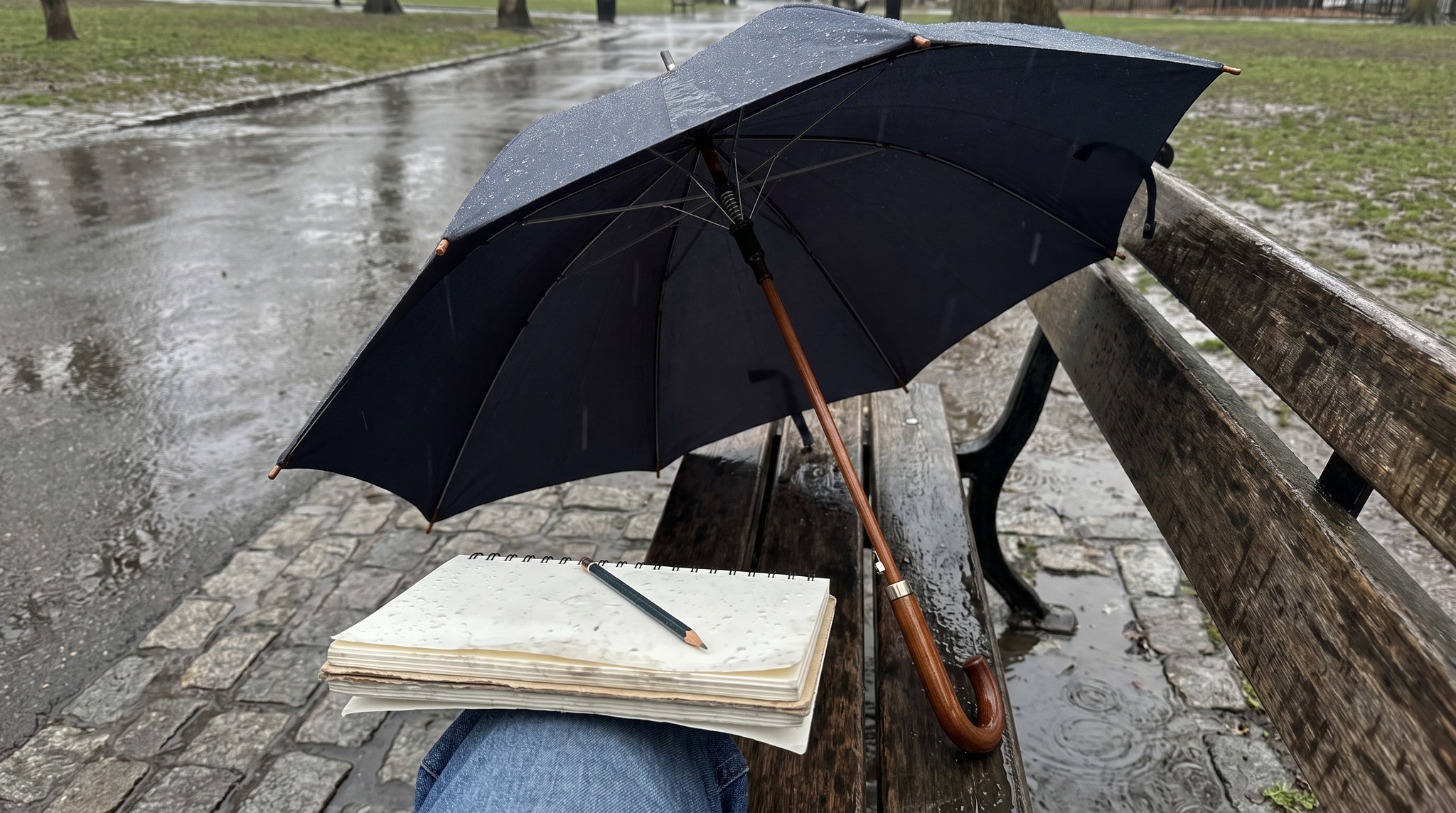
Why Sketch Outdoors in Light Rain?
Many artists and hobby painters know the problem: the light is perfect, the atmosphere inspiring, yet a fine drizzle makes drawing outdoors seem impossible. Yet light rain in particular offers a special atmosphere that can be captured in sketches. With the right preparation, you can protect your sketchbook while keeping both hands free. The only question is: what equipment do you really need, and how do you keep paper and pencils dry?
The Right Umbrella for Open-Air Artists
For drawing outdoors, a walking umbrella with a large span is far better suited than a folding umbrella. A diameter of at least 100 centimeters protects not only yourself but also the sketchbook in front of you. Look for a sturdy frame with at least eight ribs made of fibreglass or steel, so the umbrella does not give way even in gusty wind. A straight handle made of wood or plastic can be easily wedged between shoulder and neck or held with one hand while the other draws.
Setup and Positioning When Sketching
Position yourself so that the wind does not drive rain under the umbrella. Hold the umbrella tilted slightly forward so that the front edge hovers over your sketchbook. For longer work sessions, you can also wedge the umbrella between your backpack and back, or use a small clamp holder that some outdoor painters attach to their drawing board. It is important that the canopy is made of tightly woven polyester so that even fine spray does not penetrate.
Protecting Materials and Paper from Moisture
Even under an umbrella, moisture can reach your paper. Therefore, use a solid drawing board made of plywood or plastic as a base, which you hold at a slight angle. Watercolour paper weighing at least 200 grams per square metre tolerates some moisture better than thin sketch paper. Keep your pencils in a sealable pouch and only take out the one you currently need. A microfibre cloth in your jacket pocket helps to dab drops from the paper before they leave stains.
Which Techniques Work in Drizzle
Pencil, charcoal and ink are more practical in light rain than watercolours, which can run when hit by drops. If you still want to work with colour, watercolour pencils or solid colour pans are better suited than liquid tubes. Keep the drawing surface as horizontal as possible and work quickly to minimise the risk of water damage. Many artists particularly appreciate the challenge of making quick sketches that capture the atmosphere of the moment.
After Drawing: Caring for Umbrella and Materials
Open your umbrella fully after use and let it dry in an airy place to prevent mildew from forming. Wipe the frame with a dry cloth, especially if salt or dirt adheres to it. Your sketchbook should also lie open until all pages are completely dry. High-quality Umbrellas with a robust frame and dense canopy last for many years with good care and become a reliable companion for all outdoor projects. Those who regularly draw in changeable weather invest in a model with a wind-stable construction and sufficient span to protect equipment and artwork alike.
Related: Chantal Thomass, Designer umbrellas, Guy De Jean. The complete range: Umbrellas.
Related categories: Chantal Thomass, Designer umbrellas, Guy De Jean. The full range: Umbrellas.
Read more: The Umbrella at the Parcel Collection Point: Shelves, Code and Queue, Umbrella and Binoculars: Optics, Raindrops and Birdwatching, Span, Length, Weight: the Measurements That Matter in Daily Use, The Umbrella for Street Musicians: Instrument, Hat and Audience, Umbrella and Music Folder: Protecting Paper During Music Lessons